
China Didn't Build an AI Pilot. It Built an AI That Plans the Whole Air War.
A PLA documentary showed off an 'intelligent strike planning system' that prioritises hundreds of targets and coordinates dozens of formations — moving AI up the command chain, from the cockpit to the operations centre. What's real, and what's the message.
 By Des Okoro — Research Correspondent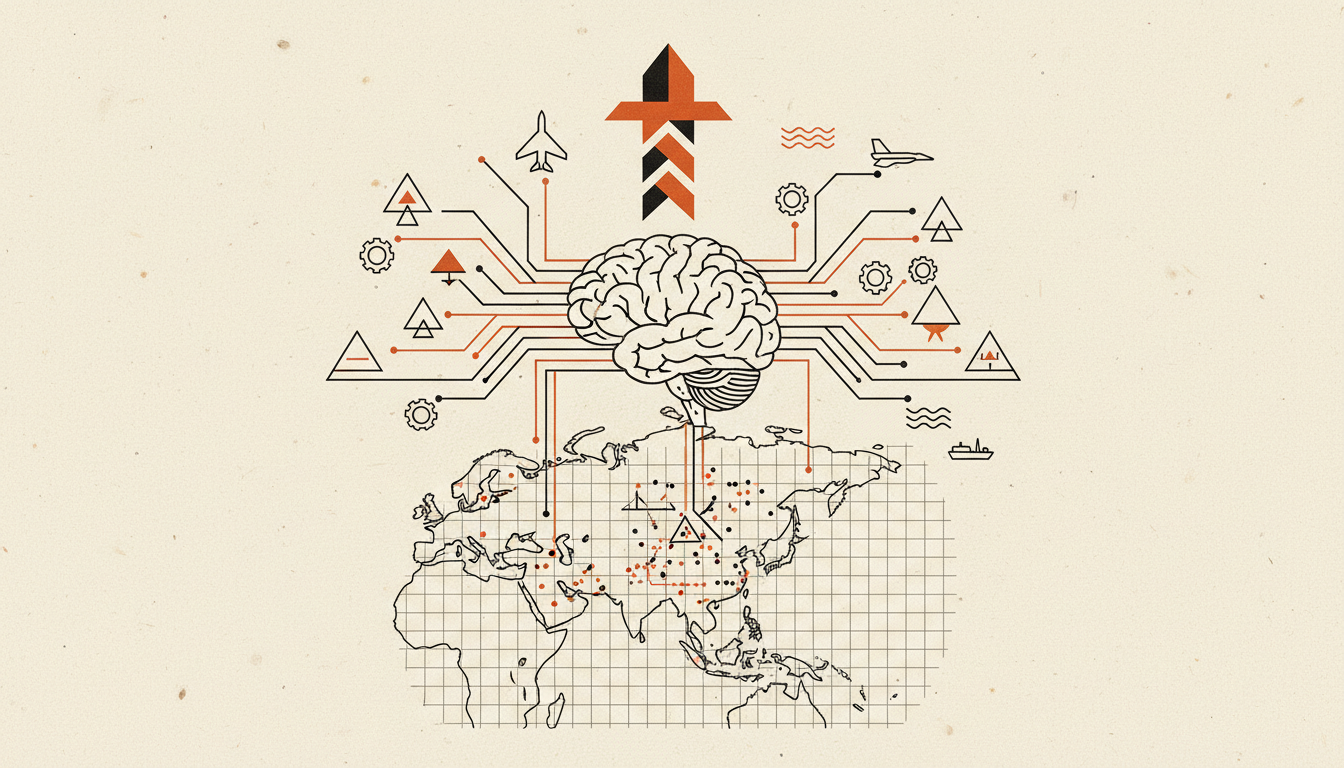
Yesterday the story in military AI was a single American fighter flying itself. This one is bigger in scope, and it came from the other side of the contest. A Chinese state-television documentary, aired in early August to mark the People's Liberation Army's 99th anniversary, revealed that the PLA Air Force has built an AI system that does not fly the planes — it plans the whole attack.
The reveal matters less for the hardware than for where in the chain of command the software now sits.
What the system does
According to the documentary and subsequent reporting, the "intelligent strike planning system" takes the job that a room full of staff officers would normally spend hours on and compresses it. Given a pool of hundreds of potential targets, it prioritises them, coordinates dozens of aircraft formations, and assigns tasks to more than 100 tactical units — matching aircraft, weapons and other resources to objectives across a large, fast-moving battle.
That is a planning problem, not a trigger-pulling one, and the distinction is the most important thing to hold onto. The system is described as supporting human commanders rather than replacing them: it draws up and compares options at machine speed, and a person still decides. A PLA Air Force team led by Senior Colonel Deng Jianping is credited with developing it, and — according to the broadcast — it has been through a final live-fire test in which the assigned munitions hit their targets.
Why "planning" is the part that counts
For most of the current wave, military AI has meant autonomy at the edge — a drone that navigates itself, or, as the US Air Force demonstrated with an AI-flown F-16, an aircraft that handles its own flying. That is AI as a better pilot.
What China has chosen to show off is AI as a better planner — moving the technology up the command chain, from the cockpit to the operations centre. The bottleneck in a large modern strike is not any single aircraft; it is the combinatorial nightmare of sequencing hundreds of targets and scores of units under time pressure without them colliding. An AI that shrinks that from hours to minutes changes the tempo a force can fight at, which is a more strategically significant capability than one clever jet.
The two approaches are a fair snapshot of the same race run from different ends: the US has invested heavily in autonomous platforms, and here China is advertising autonomous planning. Neither has removed the human from the decision to strike.
Read the source, then discount it
The necessary caution is about where this came from. This is a state-broadcast documentary timed to an army anniversary, which makes it as much a message as a briefing — to domestic audiences and to foreign militaries watching. The capability claims, the live-fire success, the readiness: none of it is independently verifiable, and a system that performs on a scripted exercise is a long way from one that holds up against an adversary trying to jam, deceive or overwhelm it.
What is harder to wave away is the direction of travel, which the documentary sits inside deliberately. In late July, Xi Jinping instructed the PLA to strengthen the "military application of unmanned intelligent technologies" and build toward an "intelligent military system." A showcase like this is what a directive of that kind looks like a few weeks later — evidence less of a finished weapon than of a stated intention to put AI at the centre of how the force plans to fight. The honest read is not that China has automated war, but that it has decided to be seen trying, and has something real enough to put on television.
Ask Relay — he reads every question himself and replies personally by email.