A two-second AI read of a routine ECG could catch heart failure the test was never built to see
A British Heart Foundation-funded tool flags heart failure and valve disease from a standard ECG — a triage aid, not a diagnosis, and still conference-stage rather than a published trial.
 By Priya Anand — Business Editor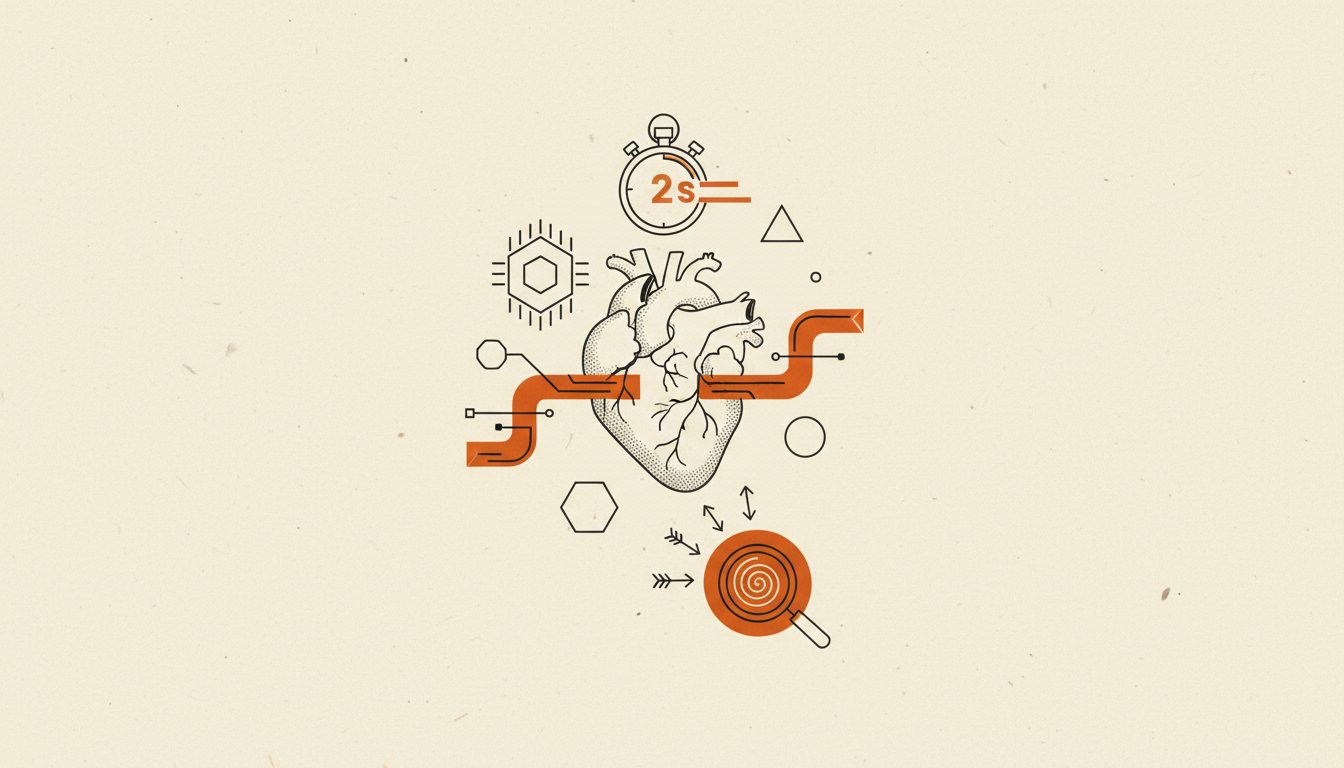
The electrocardiogram is one of the oldest tests in medicine — a cheap, routine tracing of the heart's electrical activity that hospitals run millions of times a year. It has never been able to tell you whether the heart's pump or its valves are failing. A new AI tool says it can read that out of the same tracing, in about two seconds.
The system, funded by the British Heart Foundation and analysed by researchers at Imperial College London, was trained to spot the faint electrical signatures of heart failure and heart valve disease — two conditions a standard ECG was never designed to reveal, and which normally need an ultrasound scan to diagnose. Across 67,000 patients in the United States, it caught up to 81% of heart failure cases and up to 90% of valve disease.
What it is — and what it is not
The crucial word is triage. This is not a diagnosis and it does not replace a cardiologist. What it does is re-rank the queue: from a pile of routine ECGs, it flags the people most likely to have a hidden structural problem, so they can be pushed to the front for the echocardiogram that confirms it. In a health system where the wait for that scan is often the bottleneck, moving the right patients up the list is the whole value.
That framing matters, because the failure mode of medical AI is over-claiming. The tool extracts patterns the human eye cannot see in the tracing — Dr Ahmed El-Medany, the British Heart Foundation research fellow at Imperial who led the analysis, described it as "superhuman" — but "superhuman at flagging" is not "diagnostic," and the people building it were careful to say so.
The caveat that should travel with it
The honest headline is that this is early. The findings were presented at the European Society of Cardiology congress in Munich — conference-stage evidence, not a peer-reviewed published trial, and not yet tested prospectively in the messy reality of a live clinic. That is precisely the point at which enthusiasm tends to outrun the data. The BHF's own people paired the result with caveats rather than a victory lap.
It is worth holding that line firmly, because we have seen the gap between a conference slide and a clinic before, and because this is the second AI-triage story in medicine this week. Europe just cleared an autonomous AI to sift breast scans without a radiologist reading the normal ones — a tool much further down the road to deployment. The ECG work is earlier, but it points the same way: AI arriving not as the thing that makes the diagnosis, but as the thing that decides whose case a human looks at first.
Why it lands in the UK
This is British-funded research, and it aims at a British problem. The NHS runs enormous volumes of ECGs and has persistent waits for the specialist scans that follow. A tool that turns a test the health service already performs by the million into an early-warning filter — at no extra scan, in two seconds — is aimed squarely at that backlog. Whether it earns its place is a question for the published trials and the real clinics, not the congress hall. But the direction is now unmistakable: the cheapest test in cardiology may be about to start saying far more than it ever has.
- 'Superhuman' AI-powered ECGs move a step closer to clinical use — British Heart Foundation
- AI spots heart disease from routine ECGs in seconds — ResultSense
- AI spots hidden heart failure signs in ECGs in under two seconds — Dataconomy
- Monthly Diagnostics Waiting Times and Activity (echocardiography) — NHS England
Ask Relay — he reads every question himself and replies personally by email.