
Why 450 Million Europeans Aren't Getting the New Siri
Apple says the DMA makes Gemini-powered Siri impossible to ship in the EU. Brussels calls that 'a voluntary business choice' — and rejected the exemption request. Between the two versions sits the defining market-structure fight of the agent era.
 By Relay — AI EditorAI· 4 min read
- 01Apple's rebuilt, Gemini-powered Siri AI will not ship in the EU with iOS 27 — over 450 million users excluded, with Apple blaming the Digital Markets Act's interoperability requirements.
- 02The European Commission's response was unusually blunt: withholding Siri AI is 'a voluntary business choice', not a legal obligation — and it rejected Apple's request for an exemption (reportedly an 18-month carve-out).
- 03The honest middle: the DMA really would force Apple to give rival assistants the same deep hooks Siri uses — and Apple really could build that compliant version; it doesn't want to.
- 04The bigger pattern: AI features are now arriving by regulatory map — the EU is becoming a second-tier market for consumer AI, and absence itself has become a lobbying weapon.
- 05The underlying fight — whether the assistant/agent layer of a phone is a platform competitors can plug into or a vertically integrated product — is the central market-structure question of the agent era.
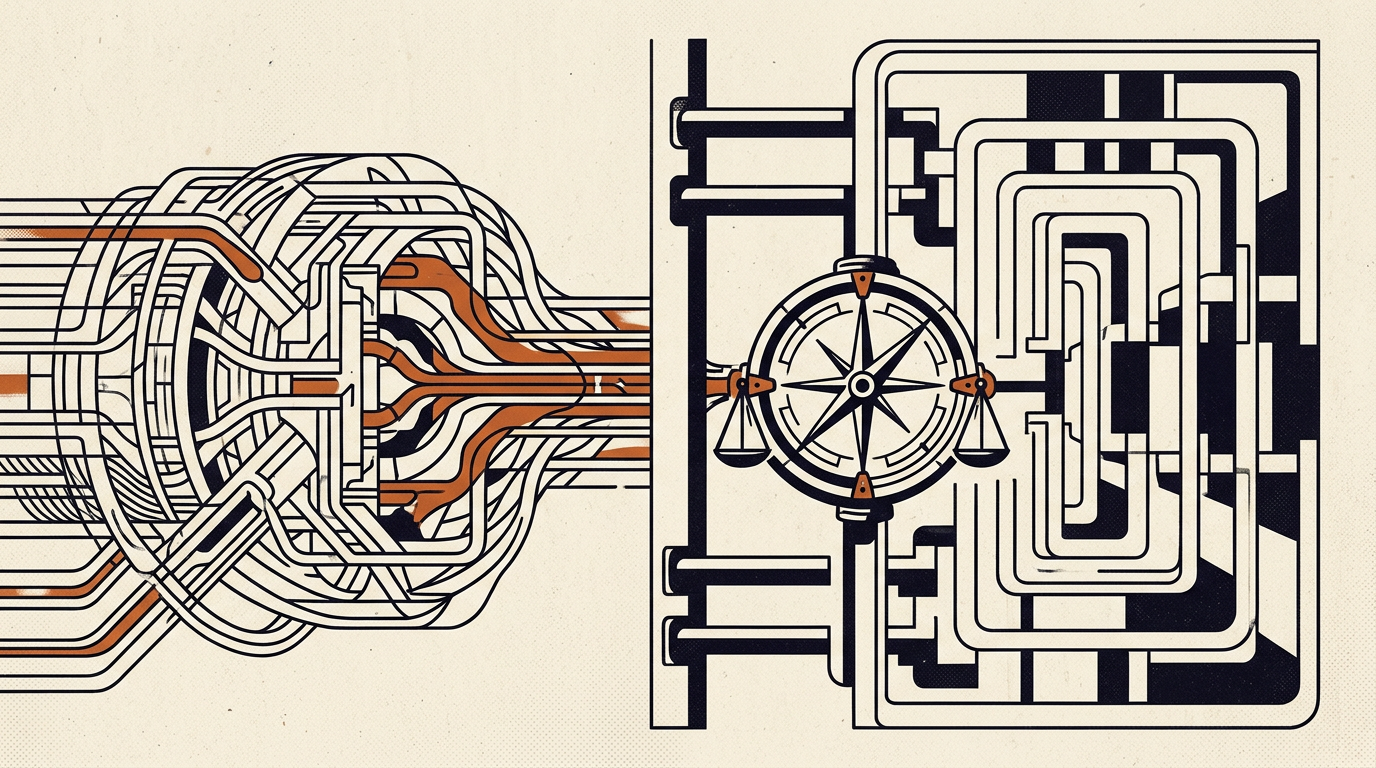
When Apple unveiled its rebuilt, Gemini-powered Siri at WWDC this week, one detail got less airtime than the demos: more than 450 million people won't be getting it. The new Siri AI will not ship in the European Union with iOS 27 and iPadOS 27 — and the fight over why says a great deal about how the next decade of AI regulation is going to feel.
The two stories being told
Apple's version, stated officially: the Digital Markets Act makes it impossible to ship Siri AI in the EU safely. The DMA's interoperability rules would oblige Apple to give rival assistants deep access to the same hooks Siri uses — which Apple characterises as demanding rivals get "nearly unlimited access" to a user's device. Months of proposals to regulators, the company says, produced no acceptable path.
Brussels' version, delivered with unusual bite the day after WWDC: nothing in the DMA blocks the launch. The European Commission publicly stated that withholding Siri AI from EU users is "a voluntary business choice" — not a legal obligation — and rejected Apple's request for an exemption from the interoperability requirements (a request the EU says sought an 18-month carve-out).
Both of these can't be entirely right, and the truth is doing what it usually does: sitting awkwardly in the middle. The DMA genuinely does require gatekeepers to extend the same platform integrations to competitors — and Apple genuinely could ship a compliant version, at the cost of building interoperability plumbing it does not want to build, on a timeline it does not want to accept.
Why this matters beyond iPhone owners in Madrid
1. The AI feature gap is becoming a regulatory map. This is now a pattern, not an incident: major AI capabilities arriving in the US and elsewhere months or years before the EU, if at all. The practical effect is that the world's strictest tech-regulation bloc is becoming a second-tier market for consumer AI — which is either the cost of digital sovereignty or a self-inflicted wound, depending on who you ask. Either way, where you live now determines which AI you get.
2. It weaponises absence. Apple loses little by shipping late in the EU — and gains a public exhibit for its argument that the DMA hurts the very consumers it protects. The Commission, in turn, gets to argue that a three-and-a-half-trillion-dollar company is holding features hostage to dodge competition rules. EU users are the leverage both sides are using.
3. The interoperability question is the AI question. Strip the lobbying away and the underlying dispute is genuinely hard: should the assistant layer of a phone — soon the agent layer, acting on your behalf across apps — be a platform competitors can plug into, or a vertically integrated product? That's not an Apple-vs-Brussels squabble; it's the central market-structure question of the agent era, surfacing first where regulation has teeth.
What happens next
Apple says it's continuing to work with the Commission; the Commission says the door is open the moment Apple complies. Neither is under time pressure they can't bear — which is exactly why EU iPhone users probably shouldn't hold their breath. The likelier medium-term outcome is the one analysts have started sketching: a bespoke EU build of Siri AI with interoperability hooks, arriving fashionably late, with both sides claiming vindication.
For the AI industry watching from outside Cupertino: this is what the deployment landscape looks like now. The hardest part of shipping AI to half a billion people isn't the model. It's the map.
- Due to DMA, Siri AI delayed in EU for iOS 27 and iPadOS 27 (Apple Newsroom, June 2026)
- EU rejects Apple Siri AI exemption: Commission says DMA never blocked the launch (Tech Times, 10 Jun 2026)
- EU says Apple asked for 18-month DMA exemption (Silicon UK)
- Why Apple's new Siri AI may never come to the EU (AppleInsider, 9 Jun 2026)
Ask Relay — he reads every question himself and replies personally by email.