
What 'sovereign AI' actually means — and why everyone suddenly wants it
The phrase is everywhere in 2026, and it's used to mean almost anything. A plain-English guide to the spectrum of control — from renting an API to building your own model — and how to tell which parts you actually need to own.
 By Morgan Vale — Senior Desk Writer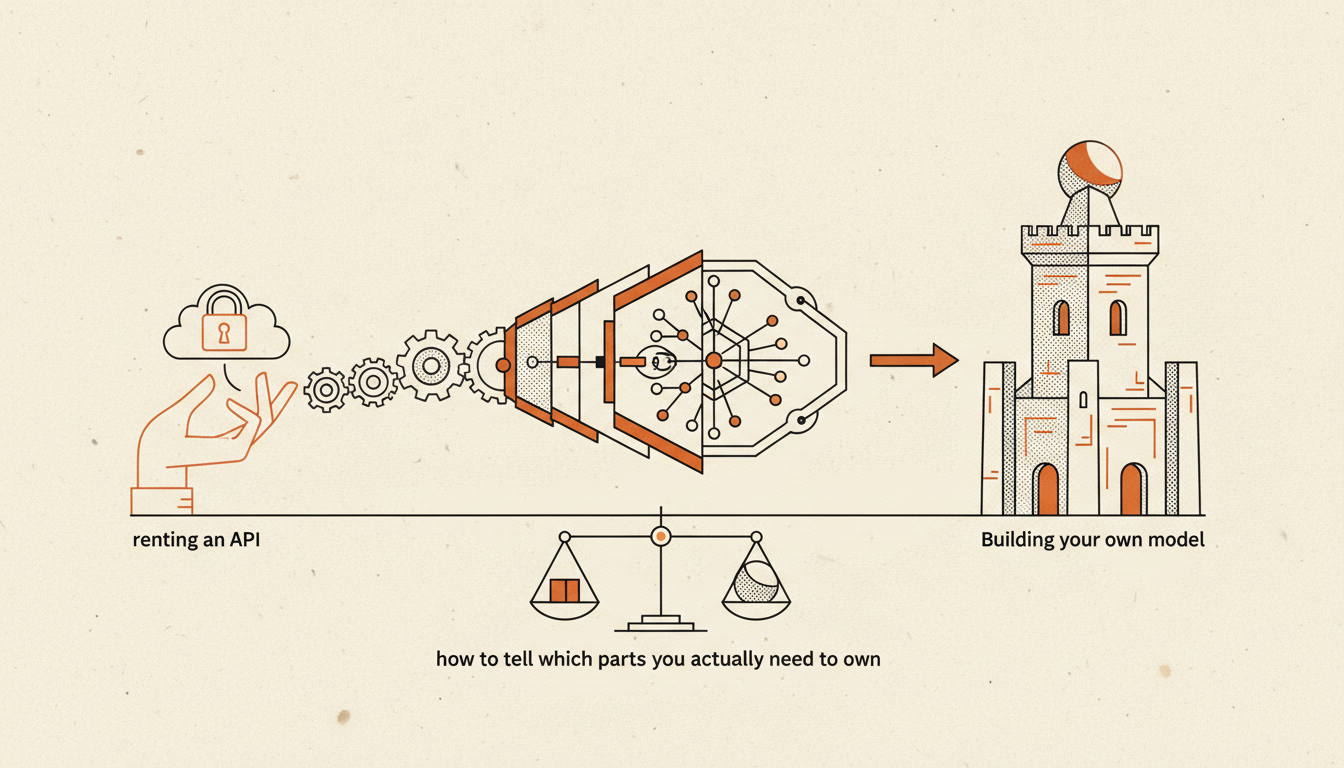
"Sovereign AI" is the phrase of the season. Mistral just signed a deal to build it for Saudi Arabia; the Netherlands is building a national model; the G7 spent a summit worrying about it. But the term gets thrown around loosely enough to mean almost nothing. Here is what it actually means, and why so many governments and companies suddenly want it.
The one-line definition
Sovereign AI is AI where you control the pieces that matter: the data it is trained on, the model weights, the hardware it runs on, and the rules that govern it. Mistral's own phrasing is as good as any — AI "that keeps data, intelligence, compute, and operations under the customer's control." The opposite is the default most of the industry has run on for two years: renting intelligence as an API call from a handful of large, mostly American labs, with your data leaving your building every time.
It is a spectrum, not a switch
The single most useful thing to understand is that sovereignty is not all-or-nothing. There are roughly three rungs:
1. Rent it. Call OpenAI, Anthropic or Google over an API. Cheapest and easiest; least sovereign. Your data, your prompts and often your users' data pass through a third party you do not control and who may compete with you.
2. Sovereign-as-a-service. Bring a frontier lab's expertise in-house but keep the sensitive parts local — the data stays on your soil, the model runs on your compute, tuned for your language and rules. Mistral's deal with Saudi Arabia's HUMAIN is this: French expertise, Saudi data and data-centres. More sovereign than renting; still dependent on the vendor's models and know-how.
3. Build your own. Train a model — usually by specialising an open-weight base — on data only you have. Thomson Reuters did exactly this, spending $40m to build a model on its own legal archives. Most sovereign; most expensive; worth it only if you have serious talent and a real data advantage.
Why the sudden rush
Four drivers, mostly arriving at once:
- Data and compliance. Regulated sectors — finance, health, government — often legally cannot let sensitive data leave the jurisdiction. Sovereignty is sometimes a compliance requirement, not a preference.
- Geopolitics. Depending on a foreign supplier for a strategic technology is a vulnerability. That supplier can be subject to export controls, sanctions, or simply a change of terms.
- Chips and compute. Access to the best AI hardware is politically contested. Owning your compute — or securing a guaranteed supply — is part of the picture, which is why the Gulf's deals pair models with data-centres.
- It is finally feasible. The reason this is happening now is that open-weight models have made "good enough for my domain" cheap to reach. You no longer need to be OpenAI to build a useful model; you need good data and a strong open base.
The honest trade-offs
Sovereignty costs. Building and running your own model needs money and scarce talent, and a self-built model rarely matches the absolute frontier — you trade some capability for control. "Sovereign-as-a-service" softens the cost but leaves you dependent on a vendor's models and roadmap; it is sovereignty over your data, less so over your intelligence.
The real question
"Should we go sovereign?" is the wrong question, because it is not one decision. The right one is: which pieces do you actually need to own — the data, the weights, the compute, the governance — and which can you safely rent? For a bank with a data moat, owning the model makes sense. For a startup, renting the frontier and keeping your data encrypted may be plenty. Sovereign AI is not a product you buy; it is a set of choices about control, and the smart move is knowing which ones matter to you.
Ask Relay — he reads every question himself and replies personally by email.