
What's an AI 'model router', and why did Stripe just pay $7 billion for one?
Frontier models are becoming interchangeable. The unglamorous layer that decides which one answers each request is quietly turning into real money — here's what a model router does, in plain terms.
 By Morgan Vale — Senior Desk Writer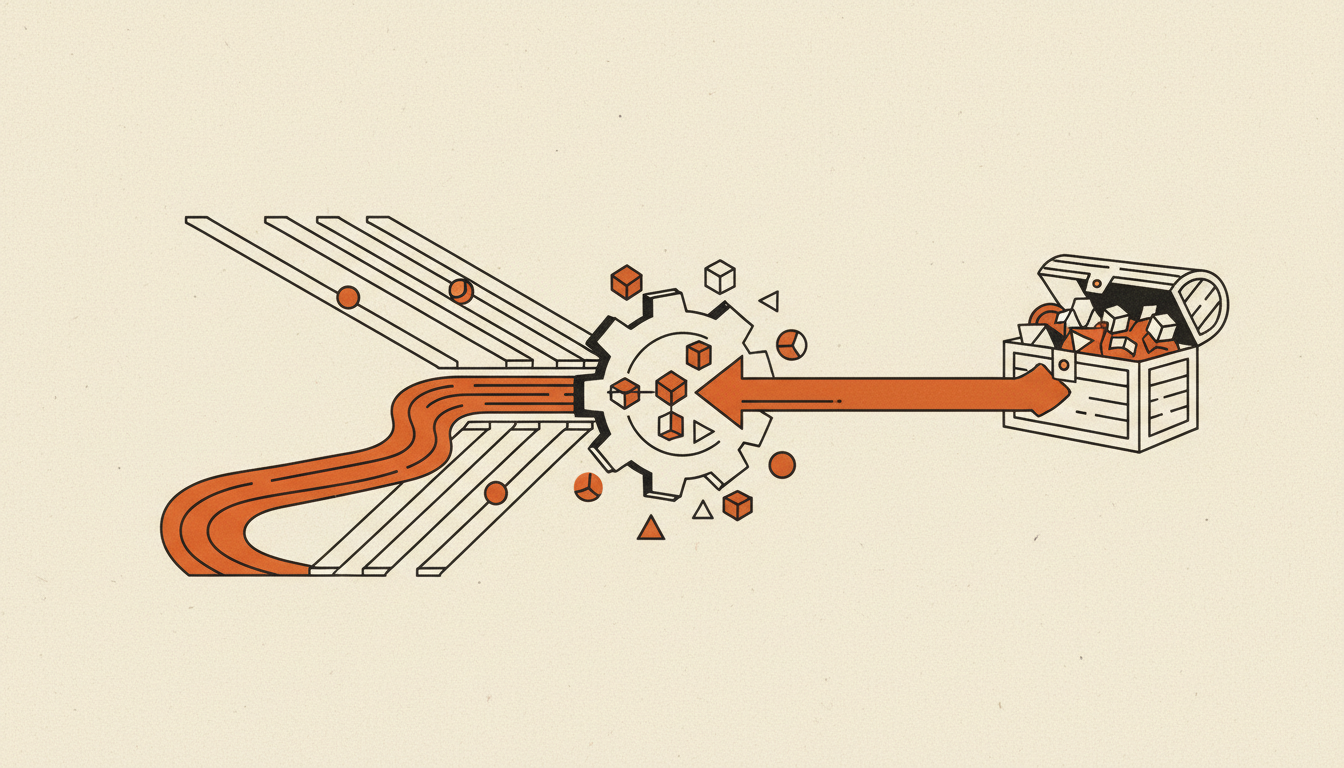
This week Stripe — a payments company best known for the checkout box on half the internet — agreed to pay more than $7 billion for a startup called OpenRouter. If you have never heard of OpenRouter, or of the thing it makes, you are not behind: model routers are one of the least visible and most quietly important pieces of AI plumbing. Here is what one actually is.
The one-sentence version
A model router is a single doorway in front of many AI models. Your app sends its request to the router; the router forwards it to whichever model you've picked — OpenAI's, Anthropic's, Google's, an open-weight model, any of hundreds — and hands the answer back in one consistent format. You write your code once, against the router, instead of once per model provider.
That sounds trivial. It isn't, because of what has happened to models.
Why the router suddenly matters: models became a commodity
A year or two ago you picked one lab, wired your app to its API, and stayed. Switching meant a rewrite. Now there is a new frontier model seemingly every fortnight, and they leapfrog each other on price, speed and quality constantly. The smart move is no longer "pick the best model" — it's "pick the best model for this specific request, today," and be ready to change your mind next week.
That is exactly the job a router does. In practice it buys you five things:
- Switching without surgery. Change one parameter to move from one model to another, instead of rewriting your integration.
- Cost control. Send the easy requests to a cheap, fast model and reserve the expensive frontier model for the hard ones. On a big app that difference is a serious bill.
- Failover. If one provider is down, overloaded or rate-limiting you, the router can fall back to another automatically instead of your app breaking.
- Comparison. Fire the same prompt at several models and see which is best for your use case, without building five integrations to do it.
- One key, one bill. Rather than holding an account, a payment method and a rate limit with every lab, you deal with the router.
OpenRouter became the popular example of this: a single endpoint offering access to more than 400 models, which made it default plumbing for a lot of developers who wanted to stay model-agnostic.
So why would a payments company buy it?
This is the part that makes the Stripe deal make sense. Look again at that last bullet — "one bill." A router doesn't just choose models; it sits in the middle of every request, which means it is the natural place to meter usage and charge for it. Who called which model, how many tokens, at what price, bill it, take a cut. That is a payments problem, and payments is precisely what Stripe does.
Stripe isn't buying a clever model. It's buying the tollbooth — the metering-and-billing layer for AI usage — at a moment when that usage is exploding. It fits a pattern running through this week's AI money news: value quietly draining out of the models themselves, which keep getting cheaper and more alike, and pooling instead in the boring infrastructure that connects, measures and bills them.
The honest trade-offs
Routers aren't free lunch. Putting one in the middle of every request adds a little latency and a new dependency — if the router has a bad day, so do you. It also sees your traffic, which for sensitive data is a real consideration. And "no lock-in to a single model" can quietly become "lock-in to a single router." For many teams the flexibility is well worth it; the point is that it's a trade, not magic.
The takeaway
If models are becoming interchangeable parts, the money moves to whoever owns the socket they plug into. A $7 billion price tag on a model router is a bet that the socket — the routing, metering and billing of AI — is worth more than any one model that plugs into it.
Ask Relay — he reads every question himself and replies personally by email.