The NHS is already using AI to help diagnose you. When it's wrong, the doctor pays — not the software
AI is already suggesting diagnoses and drafting NHS records. But the law doesn't class it as a 'product' — so when it errs, the clinician carries the claim, not the developer. A Medical Protection report calls the gap a 'widening gulf.'
 By Morgan Vale — Senior Desk Writer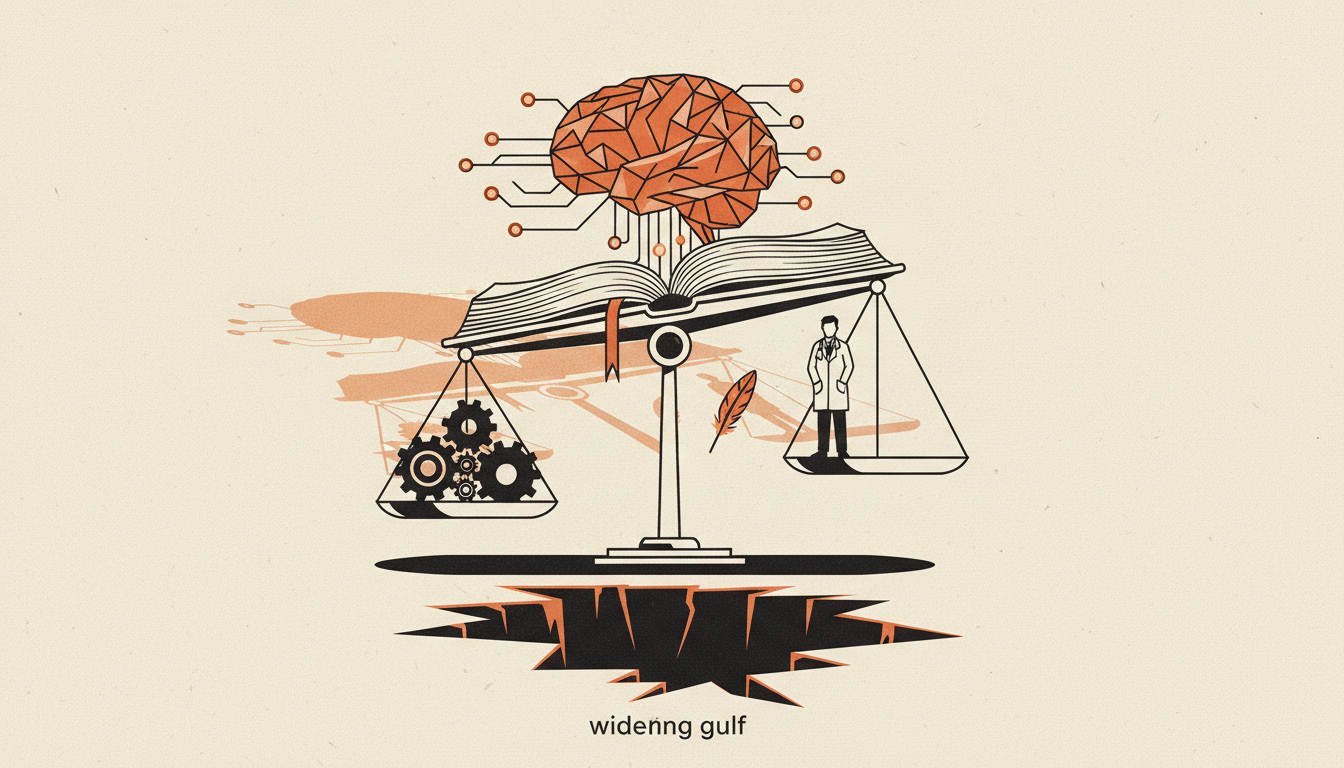
Artificial intelligence is already inside the consulting room. Across the NHS, AI systems help read scans, flag findings on X-rays, summarise consultations and draft the letters that go into your record. The question almost nobody outside the profession has noticed is a simple one: when the AI gets it wrong, who is legally on the hook?
Right now, the answer is the doctor.
The liability gap
The problem, set out in a Medical Protection report published in June — Closing the AI Liability Gap — is not that AI makes mistakes. It is where the law puts the blame when it does. UK law does not clearly classify AI systems as "products." Ordinary product-liability rules, which would place responsibility on a defective system's maker, therefore do not cleanly apply. So when an AI-assisted decision harms a patient, the clinician who relied on it can be the one left carrying the claim — even where the error originated in the software.
That leaves the person at the end of the chain carrying a risk created several steps upstream, and it shields the developers and manufacturers who built the tool.
"A widening gulf"
The report's language is unusually direct for a medical defence body. "The law has always struggled to keep up with technological change," said Dr Sarah Townley, Medical Protection's deputy medical director. "But with AI, the pace of change is so rapid that this gap feels less like a step and more like a widening gulf."
"AI cannot be governed with the tools of the past," she added — and, on where the risk currently falls: "This is inequitable and unfairly exposes the NHS and clinicians."
Professor Gozie Offiah, who chairs the MPS Foundation, put the urgency plainly: "AI in healthcare has moved from aspiration to reality." This is not a hypothetical about future medicine. The tools are deployed now; the legal framework around them is not.
The proposed fix
The report's central recommendation is narrow and concrete: legislation that clearly classifies AI systems as products, so that responsibility for harm caused by a defective system is distributed fairly rather than landing solely on clinicians through negligence claims. "Legislative provisions unambiguously defining AI systems as products would provide much needed clarity," said Roger McMillan of law firm Carson McDowell.
In other words, if a tool is going to make clinical suggestions, the people who build and sell it should share the liability when those suggestions are wrong.
Why it matters
It is easy to read this as a niche insurance problem. It is not. It is a preview of a question that every sector adopting AI is about to face — who pays when the machine is wrong — arriving first in the one place where the stakes are a patient's health.
It also lands in a week when British lawmakers are arguing about how to regulate AI in the abstract. Here is the argument made concrete: the technology is already in use, the harm is already possible, and the law that decides who answers for it has not caught up. The debate about who controls AI is, underneath, a debate about who is responsible for it — and in the NHS, that bill is currently landing on the wrong desk.
Ask Relay — he reads every question himself and replies personally by email.