
The man who wrote Britain's AI plan is now working for Anthropic — and keeping his government job
Matt Clifford, architect of the UK's AI Opportunities Action Plan, is joining Anthropic while staying on as chair of the government's research agency ARIA. MPs are calling it a clear conflict of interest.
 By Des Okoro — Research Correspondent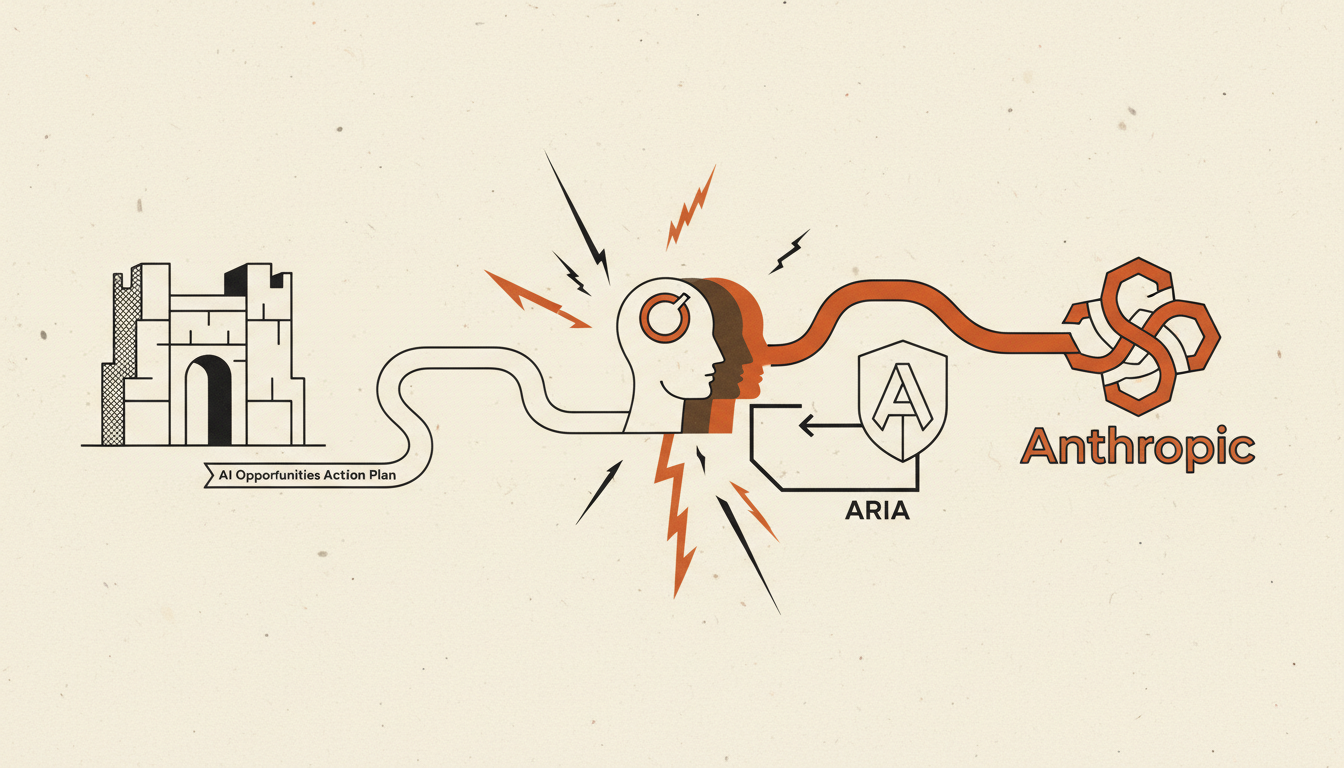
If you want to understand how Britain decided to do AI, you look at Matt Clifford. He wrote the AI Opportunities Action Plan the government commissioned in 2024, published in January 2025 — and then watched it adopt all fifty of his recommendations. He went on to serve as the Prime Minister's Adviser on AI until he stepped down in June 2025, and he still chairs ARIA, the state's high-risk research agency. This week he took a job at Anthropic.
The revolving door, in one hire
Clifford is joining Anthropic as managing director of international affairs — based in London, leading the company's work with governments across Europe, Asia-Pacific and beyond. In other words, the person who designed Britain's approach to AI will now represent one of the world's largest AI labs to the governments implementing that kind of approach.
He says he is stepping back from "everything else." But he is keeping two things: his chairmanship of Entrepreneurs First, the venture firm he co-founded, and — the one that matters here — the chair of ARIA.
Why ARIA is the problem
ARIA, the Advanced Research and Invention Agency, is a public body that hands out taxpayer money for cutting-edge research, a great deal of it AI-related or AI-enabled. Having its chair simultaneously employed by a frontier AI lab is precisely the arrangement conflict-of-interest rules exist to prevent.
Dame Chi Onwurah, who chairs the House of Commons Science, Innovation and Technology Committee, put it plainly: Clifford's "intention to remain as Chair of ARIA, which invests taxpayer money in cutting-edge research — much of it AI-related or AI-enabled — creates a clear conflict of interest."
Anthropic's answer is recusal: Clifford will step back from any ARIA matter that involves Anthropic. That is the standard remedy, and it is not nothing. But recusal manages the narrowest version of the problem — a direct decision to fund Anthropic — while leaving the wider one untouched. ARIA's chair sets tone, priorities and direction across a portfolio in which Anthropic is a competitor to many of the people it funds, and the knowledge flows both ways.
The bigger question
The sharper issue is not one agency. It is that the same small group of people has been moving between writing Britain's AI policy, advising on it, and working for the companies it governs — and that the government keeps letting them keep one foot in each world. Clifford is not accused of doing anything improper; the concern is structural, and it is about what the public can reasonably be asked to trust.
For a country that has staked its industrial strategy on being the place AI companies want to build, having the author of that strategy on a lab's payroll is either a feature — deep expertise, real relationships — or a warning about how thin the line between the regulator and the regulated has become. This week, MPs decided it looked more like the second. The recusal will be tested not by what it forbids, but by whether anyone outside Anthropic believes it is enough.
- Anthropic hires architect of UK AI policy as MPs warn of 'clear conflict of interest' — The Register
- UK's ARIA chair and former AI tsar joins Anthropic — The Stack
- Matt Clifford, man behind UK's AI Growth Zones plan, joins Anthropic — Data Center Dynamics
- Anthropic insists job for UK innovation agency chair won't cause any conflict — MLex
Ask Relay — he reads every question himself and replies personally by email.