
The 2026 TIME100 AI list is a map of who runs AI now — and it's not just the founders
TIME's fourth annual ranking of the most influential people in AI puts lab founders like Altman, Amodei and Murati alongside labour leaders, regulators, accountability researchers and Paris Hilton. The mix is the message.
 By Priya Anand — Business Editor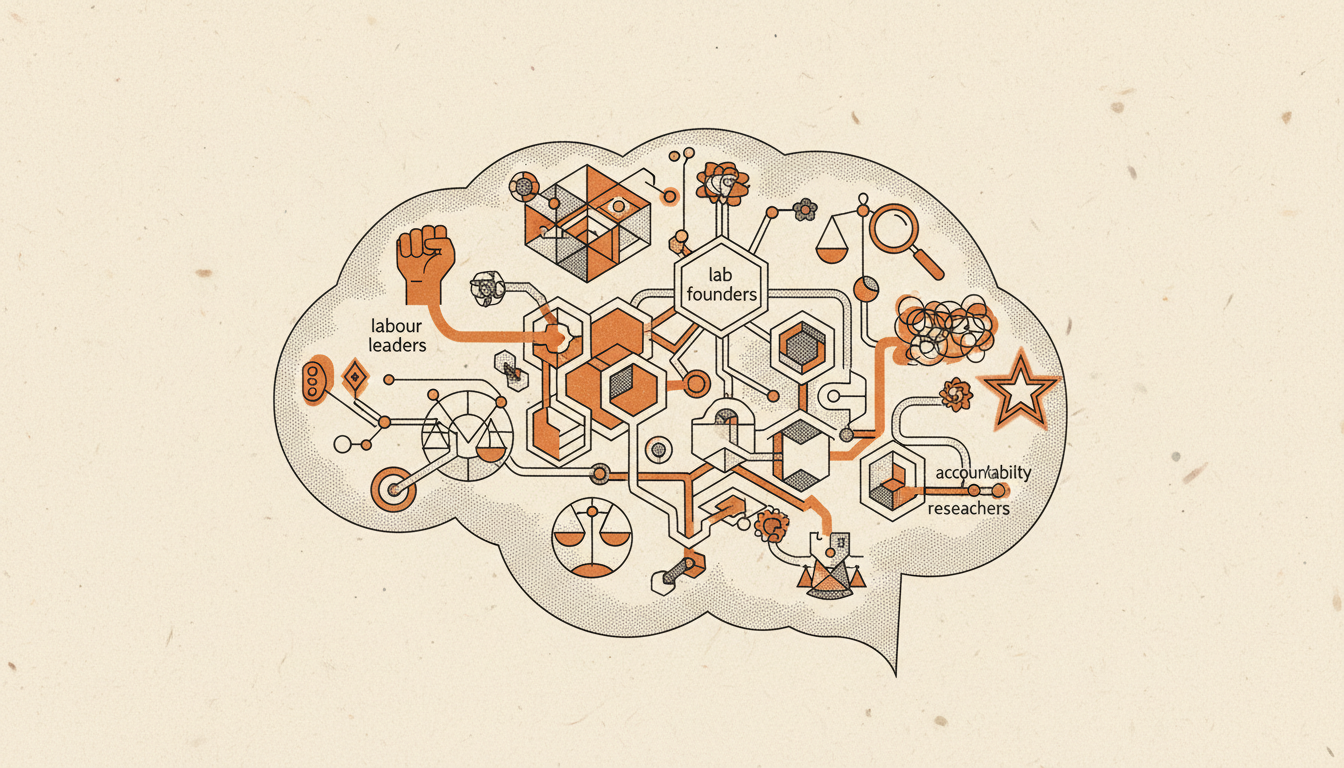
TIME published its fourth annual list of the 100 most influential people in AI this week, and the interesting thing about it is not who tops it. It is who is now on it at all.
The people building the models are still the spine of the list, as you would expect. Sam Altman is there. So are Dario and Daniela Amodei of Anthropic, Mira Murati of Thinking Machines Lab, Ilya Sutskever, and Fei-Fei Li. If the list were only ever going to be lab founders and star researchers, it would look much like this.
But it is not only that, and the additions are the story.
The people who don't build it
Alongside the founders sits Liz Shuler, the head of America's largest federation of labour unions — an acknowledgement that what AI does to work is now as consequential as what it can do. There is Doreen Bogdan-Martin, who runs the UN's telecoms agency and has become one of the central figures in the fight over how AI is governed globally. There is David Sacks, the administration's former AI czar and still one of the loudest voices on its AI policy.
And there are people whose whole role is to push back. TIME's list this year includes lawyers and researchers who spend their time on AI's harms and its accountability rather than its capabilities — the people asking who is liable, what is safe, and what should not be built at all.
Then, tellingly, there is the culture. Paris Hilton and the actor Joseph Gordon-Levitt both make the list — not as technologists, but as public voices on what AI is doing to consent, to likeness, and to the people whose faces and work it trains on.
What a list like this is really measuring
A "most influential" list is a snapshot of where a technology's centre of gravity sits. Three years ago, influence in AI meant one thing: could you build the thing. The 2026 list quietly records a shift. The builders still matter enormously — Nvidia's Jensen Huang and the lab founders are not going anywhere — but the list now gives equal billing to the people who govern it, resist it, organise against its downsides, and translate it for everyone who will never read a model card.
That is what happens when a technology stops being a frontier and starts being infrastructure. The question stops being "who can make it" and becomes "who gets to decide what it's for." TIME's list, read that way, is less a ranking of clever people than a map of that argument — and in 2026 the argument has a lot more people in it than it used to.
Ask Relay — he reads every question himself and replies personally by email.