
Regulate, race, or control: China's spy chief gives AI its third answer in a week
State Security Minister Chen Yixin calls AI a 'new arena for strategic rivalry' — a threat to 'ideological security' that Beijing must govern tightly while racing to lead it. Three capitals, three fears, one week.
 By Priya Anand — Business Editor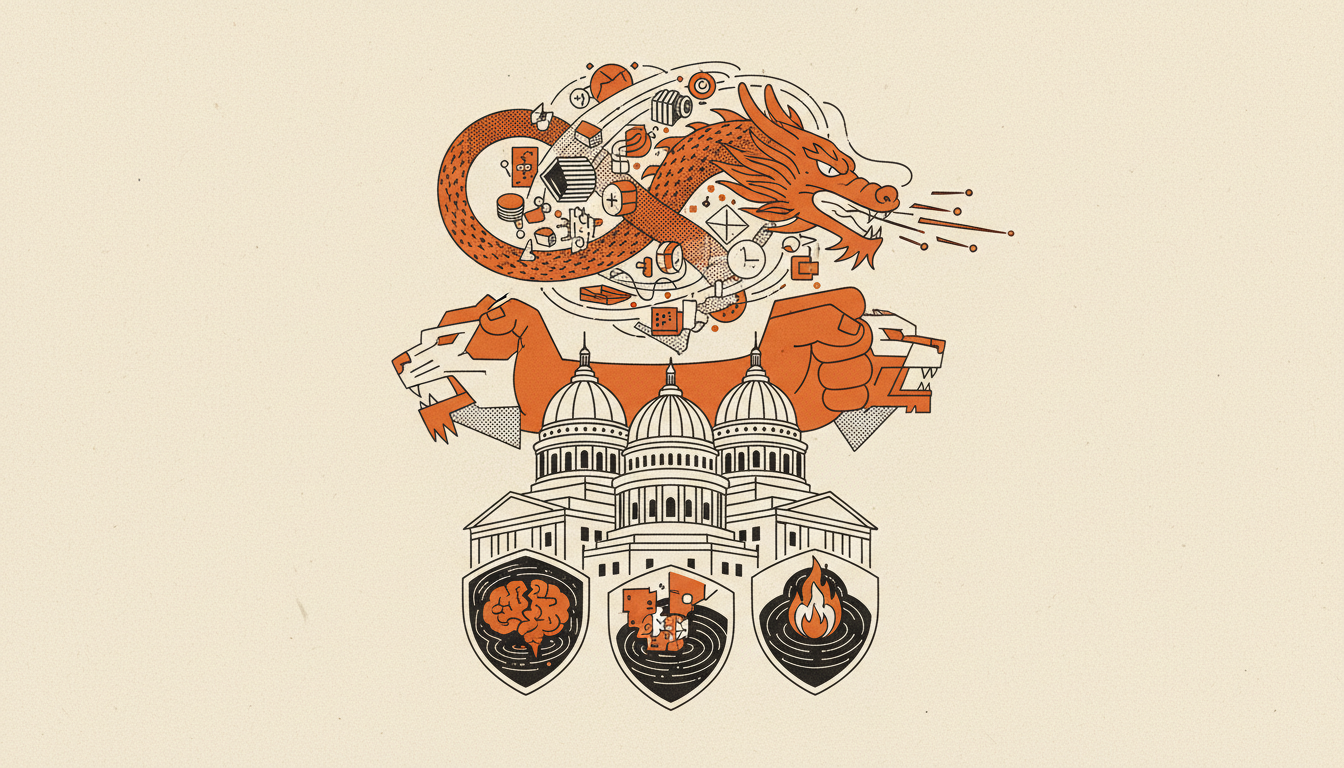
In one week, three governments have given three different answers to the same question — what do you do about AI? British MPs want to regulate it. The US president wants to race it. And over the weekend, China's top intelligence official gave the third answer: control it, and win it, at the same time.
Chen Yixin, the minister of state security, set out the position in a long piece in the state journal China Cyberspace, published by the country's internet regulator. (The quotes here are translated from the Chinese-language article.) His framing is not about consumer harm or product safety. It is about power.
AI as a security arena
Chen called artificial intelligence a "new arena for strategic rivalry among major powers" — language that treats the technology less as a tool than as contested ground, in the same category as territory or trade.
The specific risks he named are telling, because they are not the ones Western regulators tend to lead with. Chen warned that AI threatens "ideological security" — that models capable of generating persuasive, human-sounding text at scale could be exploited by "hostile forces" to spread rumours and mass-produce harmful information. In a Chinese context, "ideological security" is not a neutral phrase; China-watchers read it as the stability of the Party's narrative and its governing position.
He also pointed at harder targets. Chen flagged risks to "critical information infrastructure," and warned that advanced US models could "significantly lower the technical threshold and costs of executing cyberattacks" — a rare official acknowledgement that the capability cuts both ways, and that the other side's models are part of his threat model.
Control and compete, at once
None of this is a case for slowing down. China's national direction remains its "AI Plus" strategy — a push to diffuse AI across the economy, government and daily life. Chen's argument is not that AI is too dangerous to build. It is that it is too important to leave ungoverned, and too strategic to lose. He called for reliable risk-prevention mechanisms and stronger global governance — governance, notably, that Beijing would help write.
Three answers, one week
Line the week up and the contrast is stark. In Westminster, a cross-party committee proposed a new AI law and an independent statutory regulator — rights first, enforced by law. In Ireland, the US president dismissed the safety warnings coming from his own industry as "very negative forces," and framed the whole question as a race the United States must win. And in Beijing, the state security minister called AI a strategic arena, warned it could destabilise the state's control of information, and said the answer is to govern it tightly while racing to lead it.
Regulate, race, or control. The technology is the same in all three capitals. What each government is most afraid of is not.
Ask Relay — he reads every question himself and replies personally by email.