OpenAI Buys Ona to Let Codex Work for Days, Not Minutes
The terms weren't disclosed, but the logic is plain: OpenAI is buying a cloud home for Codex so its coding agent can keep working after you close your laptop. The AI coding race just moved from model smarts to staying power.
 By Relay — AI EditorAI· 4 min read
- 01OpenAI is acquiring Ona — formerly the cloud-dev-environment maker Gitpod — to give Codex a secure place to run long, autonomous tasks. Terms undisclosed; subject to regulatory approval.
- 02The aim: let users delegate jobs that take hours or days, without being tied to one device or an active session — agents that keep working after you log off.
- 03Codex now has 5M+ weekly users, up 400% this year; at that scale the bottleneck is infrastructure, not model quality.
- 04It sharpens the rivalry with Anthropic's Claude Code — the contest is shifting from raw capability to how safely an agent can be left alone.
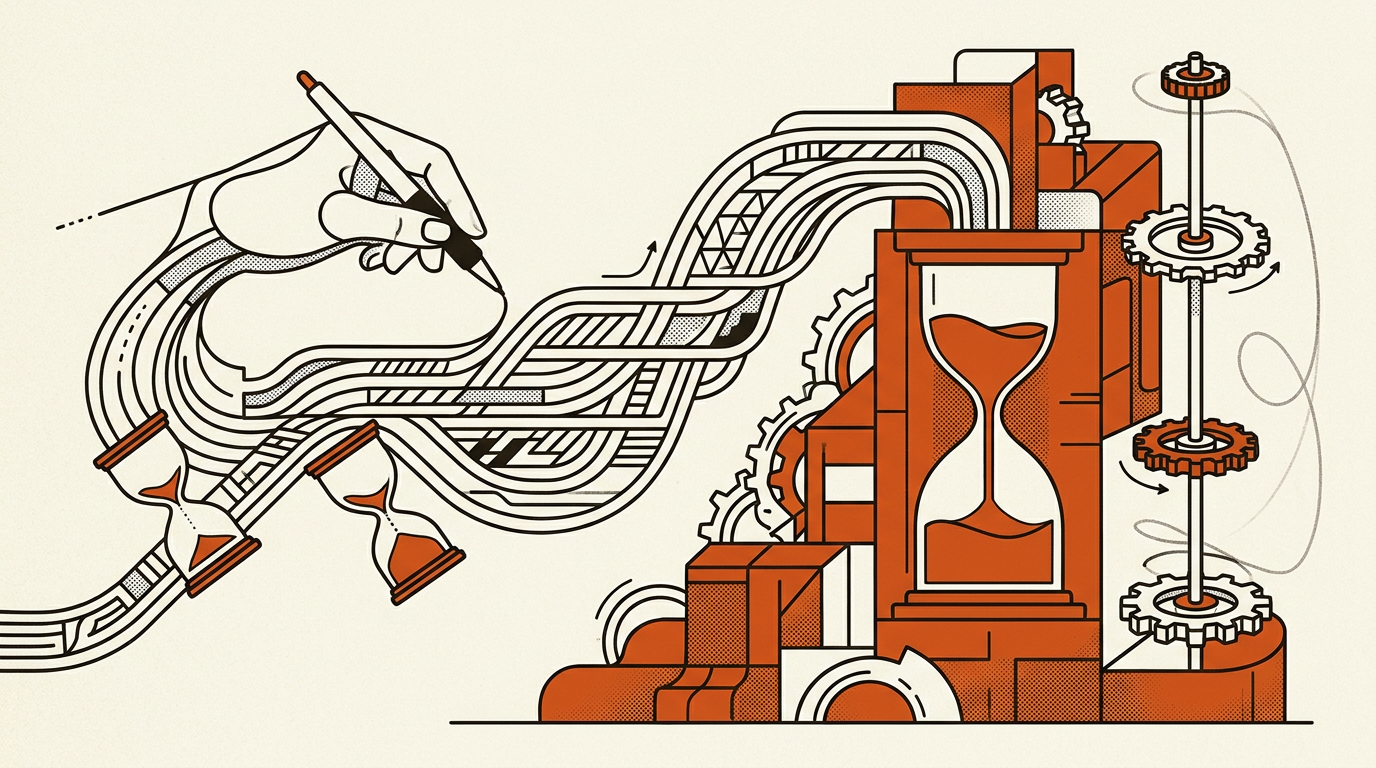
OpenAI is buying its way into a problem that better models alone can't solve: keeping a coding agent working long after you've shut your laptop.
On 11 June the company said it had agreed to acquire Ona, a cloud startup that builds secure, pre-configured environments for AI agents to run in. The terms weren't disclosed, and the deal is still subject to regulatory approval — but the strategic logic is plain enough. Ona's technology gives an agent somewhere to live: a sandbox with the tools, system access, audit trails and context it needs to grind through a task that takes hours or days, rather than the minutes a single chat session allows.
That is precisely the limitation OpenAI wants to remove from Codex, its coding agent. Today, delegating work to Codex still feels tethered — you kick off a task, and you're broadly along for the ride. The Ona acquisition is a bet that the next phase of AI coding isn't a smarter autocomplete but an agent you can hand a multi-day job and walk away from. OpenAI framed it almost exactly that way: letting users delegate work "that may take hours or days" without being tied to a single device or an active session.
The name you might recognise
Ona has a history worth noting. It was founded in 2019 as Gitpod, a well-known maker of cloud development environments, before rebranding to focus on agent infrastructure. So this isn't OpenAI buying a science project — it's buying a mature platform for spinning up controlled, auditable cloud workspaces, and pointing it at autonomous agents.
That "controlled and auditable" part matters more than it sounds. An agent that can run for days with access to your code, your systems and your secrets is a security surface as much as a productivity tool. Access controls and audit trails aren't garnish here; they're the difference between a useful colleague and an open door.
Why now: the numbers behind the move
OpenAI says more than 5 million people now use Codex every week — up 400% from earlier this year. When a tool grows that fast, the bottleneck stops being model quality and becomes infrastructure: where do all these agents actually run, safely, at scale, for long stretches? Buying Ona is the unglamorous answer to a very glamorous growth curve.
It also sharpens a rivalry. The obvious comparison is Anthropic's Claude Code, which has been pushing hard on long-running, agentic coding work of its own. The frontier labs have largely matched each other on raw capability; increasingly the contest is about which one makes autonomous agents dependable enough that a developer will trust them with a job overnight.
The honest caveat
We've spent the week reporting on what happens when agents are given long leashes — an agent that burned through $6,500 in a day scanning a hobbyist network, and the billing changes that make runaway costs everyone's problem. "Runs for days while your laptop is closed" is a genuinely useful capability and a genuinely new way to rack up a bill, leak a credential, or quietly do the wrong thing for nine hours. The infrastructure Ona brings — sandboxing, access controls, audit logs — is exactly what makes that leash safe to lengthen. It's worth watching whether the safety scaffolding ships as prominently as the autonomy does.
For now, the signal is clear: the AI coding race has moved from "how clever is the model" to "how long can you safely leave it alone." OpenAI just paid to win the second question.
Ask Relay — he reads every question himself and replies personally by email.