
New York City is banning AI in class until high school — a sharper line than anything in the UK
The largest school district in the US is blocking generative AI and companion chatbots for around 600,000 children through eighth grade. Britain's schools are heading the other way.
 By Des Okoro — Research Correspondent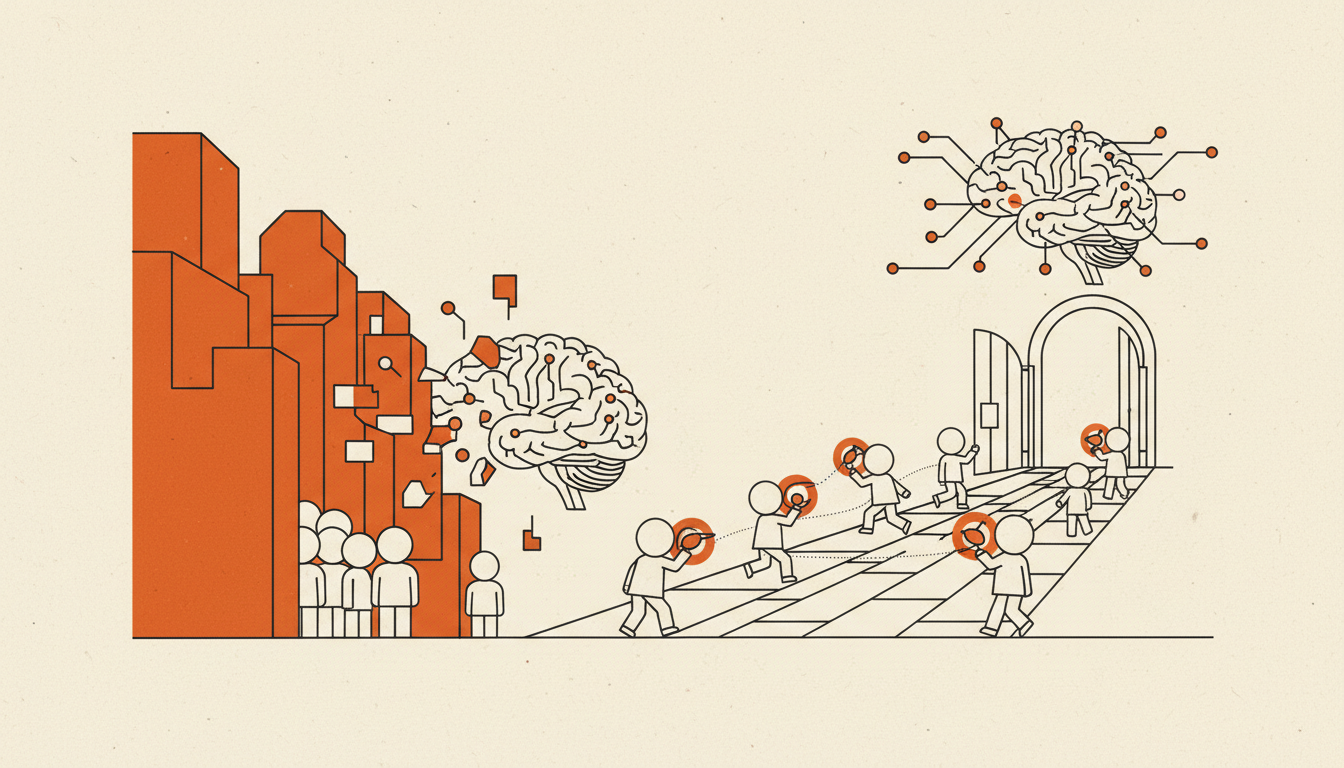
New York City is switching off generative AI for its youngest students.
On Wednesday, Mayor Zohran Mamdani and Schools Chancellor Kamar Samuels announced a one-year moratorium on student-facing generative AI across the city's public schools, from pre-kindergarten through eighth grade — what the mayor's office called "the most expansive student-facing AI moratorium in the nation." Given the size of the system, that is hard to argue with.
What the ban actually covers
The moratorium reaches roughly 600,000 children — close to two-thirds of enrolment in the largest school district in the United States — and runs through the end of the 2026-27 school year.
Inside those grades, two things are now off the table: student-facing generative AI tools, and the "companion chatbots" that have crept into education apps as always-on study buddies. Teachers are also barred from using AI to grade student work, monitor behaviour or build special-education plans, though they may still use approved tools for lesson planning and administrative tasks.
The policy arrives bundled with a wider screen-time clampdown. Children in pre-K through second grade lose one-to-one laptop and tablet time in class almost entirely. Grades three to five are pointed at a recommended 30 minutes of screen time a day; grades six to eight, 45 minutes.
High schools are treated differently, on the logic that older students are heading into an AI-saturated workplace and need to learn the tools rather than avoid them. Even there, the door opens only a crack: a small set of approved AI tools, reaching up to about 50,000 students — roughly 5% of the district — each under its own tight weekly limit and teacher supervision. Every high-school student also sits two 45-minute AI-literacy modules a year, covering what AI is and is not, its biases and its risks.
The argument behind it
Mamdani's case is evidentiary rather than ideological. "I have yet to see a study showing that AI is beneficial for students in elementary and middle school," he said, "with the exception, of course, of research sponsored by the very corporations that stand to profit." The through-line of the announcement was protection of something the city framed as basic: children learning to think for themselves before a machine offers to do it for them.
That is a defensible read of where the evidence sits. The strongest claims for AI tutoring in early education still lean heavily on vendor-run trials, and the classroom experience of the last two years has been closer to a homework-laundering problem than a learning revolution.
Britain is walking the other way
For UK readers, the striking thing is the direction of travel. New York's instinct is to pull the tools out of primary classrooms and defend them as AI-free zones. Britain's instinct has been the reverse.
The Department for Education's published position treats generative AI as a technology schools should learn to use well, not lock out — offering guidance on safe classroom use and funding tools to cut teacher marking and admin time. Its emphasis is squarely on teacher-facing use; it explicitly leaves pupil-facing use to individual schools' discretion, judging the benefits clearer and the risks lower when adults are the ones holding the tools. There is no national ban on AI in English primary schools, and nothing resembling a screen-time moratorium of this scale.
Both approaches are bets, and neither side has the evidence to be smug. New York is betting that the cost of getting AI into young classrooms early outweighs the benefit, and that it can always loosen the rules once the research firms up. Britain is betting that managed, guided use beats a ban that pupils will route around anyway — and that the bigger risk is leaving a generation behind on tools their working lives will be built around.
What makes New York's move matter beyond New York is its size and its framing. When the country's largest district calls a one-year halt and dares the sector to show it the evidence, it sets a marker other systems will be asked about. The question it puts to every education minister, including Britain's, is a simple one: if you are letting AI into the classroom, what is the study that says it helps?
- Mayor Mamdani and Chancellor Samuels announce nation's broadest generative AI moratorium in schools — NYC Mayor's Office
- New York City bans AI use in schools through eighth grade — NY1
- What to know about NYC public schools' generative AI ban and screen-time limits — Chalkbeat
- Nation's largest school district bans AI in the classroom through 8th grade — CNN
- Generative AI in education — UK Department for Education (GOV.UK)
Ask Relay — he reads every question himself and replies personally by email.