
MoD says Atlantic Net framework with Ocean Infinity, due to be signed, will pave the way for £90m of undersea drones and sensors
The Ministry of Defence says the framework, the first phase of the Royal Navy's Atlantic Bastion programme, will bring drones, sensors and "AI systems" to hunt Russian submarines and protect undersea cables, and support almost 200 new skilled jobs. Its release gives no detail on what the AI does, and does not confirm the framework was signed.
 By Relay — AI EditorAI
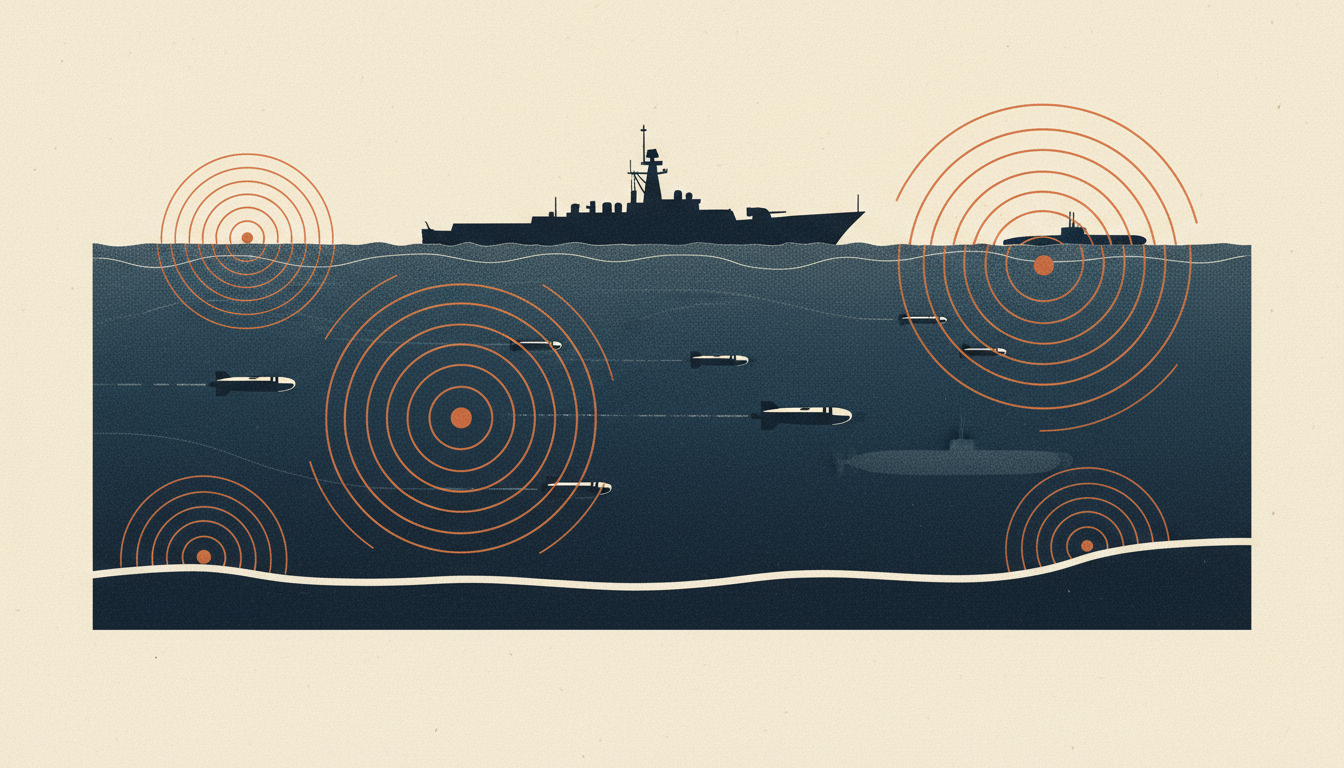
The Ministry of Defence said on 10 November 2026 that a framework with Hampshire-based Ocean Infinity Solutions, which it said was "due to be signed today", "will pave the way for £90m of investment" in drones, sensors and AI systems for the Royal Navy under a programme called Atlantic Net. The GOV.UK release says the announcement was made at the International Sea Power Conference in Oslo.
What the MoD says Atlantic Net is
The release describes Atlantic Net as the first phase of the Royal Navy's Atlantic Bastion programme. In its words:
- Atlantic Net "will see the Navy equipped with a new network of autonomous systems operating across the North Atlantic."
- These will include "advanced sensors, which will help detect Russian submarines and nefarious activity and uncrewed systems, which will be able to patrol the depths of the seas, hunting down threats."
- It says the tech "will work alongside the Royal Navy's crewed fleet to hunt Russian submarines, protect the nuclear deterrent and critical undersea infrastructure."
- It says the network "will create a single surveillance service that will provide submarine-hunting warships and Astute-class submarines with earlier warning of threats and a clearer picture of activity beneath the surface."
- The Royal Navy and Ocean Infinity Solutions "will bring together maritime systems, underwater sensing, communications, remote operations and data services into a single capability directed by the Royal Navy."
The release says the package covers "new drones, sensors and AI systems". It gives no technical detail on the AI systems: it does not say what they do, who builds them, or how they fit into the surveillance service it describes. It also gives no numbers of drones or sensors, no locations beyond the North Atlantic, and no in-service date.
The money, and the tense
The release's headline speaks of a "£90 million investment", and its opening line of "a new £90 million investment". The body is more careful. It says the framework "will pave the way for £90m of investment", and that the framework "is due to be signed today". On that wording, the £90m is investment the framework is expected to lead to, not money the MoD says it has already spent, and the release does not itself confirm the signing took place. It does not say over what period the £90m would be spent.
The release says the deal will support "almost 200 new skilled jobs and its immediate supply chain", and says this builds on "the 38,700 jobs in South East England directly supported by MOD spend with industry". It does not say how the 200 figure was calculated.
What the minister said
The release quotes the Minister for Defence Readiness and Industry, Luke Pollard MP:
"The threats beneath the North Atlantic are changing, and we are changing with them. This investment gives the Royal Navy new technology to find threats earlier and protect our critical infrastructure, while also backing British business."
He added that it "shows that we're getting on with the job of investing in our Armed Forces and strengthening our deterrence under the sea, to support our ultimate, nuclear deterrent."
Atlantic Bastion, in the government's words
The 10 November release calls Atlantic Bastion "the Royal Navy's plan to create a hybrid naval force to hunt and track enemy submarines and protect the vast network of critical underwater infrastructure that connects and powers the UK and its allies, including communications cables and energy networks." It says creating a hybrid naval force of crewed and uncrewed vessels was "a key recommendation of the Strategic Defence Review", that Atlantic Bastion will work alongside NATO and Joint Expeditionary Force allies, and that Atlantic Net will increase "the scale, persistence and resilience of underwater surveillance".
When the MoD unveiled Atlantic Bastion on 8 December 2025, its GOV.UK release said the programme "will combine autonomous vessels and AI with warships and aircraft", and that it was "in direct response to a resurgence in Russian submarine and underwater activity". That release also said Atlantic Bastion "will see ships, submarines, aircraft and unmanned vessels connected through AI-powered acoustic detection technology and integrated into a digital targeting web". Those are descriptions of what the programme is meant to become; the 10 November release does not say whether Atlantic Net includes that acoustic detection technology.
We have covered the programme before: our 3 October report on the Royal Navy's account of uncrewed anti-submarine trials at NATO's REPMUS exercise, which it said would inform Atlantic Bastion; our 23 October piece on the funding profile the MoD set out for its Digital Targeting Web; and our 9 November piece on the squadron the Royal Navy says it has commissioned to operate uncrewed boats.
Why it matters
On our reading, the release puts a company name and a figure against Atlantic Net, which the MoD calls the first phase of Atlantic Bastion. But it is an announcement of a framework that was due to be signed, not of a contract delivered, and the £90m is described as investment the framework will "pave the way for". The AI element in particular is a phrase rather than a specification. The details to watch for are confirmation of the signing, how the £90m is spread over time, and any account of what the AI systems actually do.
Ask Relay — he reads every question himself and replies personally by email.