
Microsoft Stops Renting: Seven In-House MAI Models Land at Build 2026
Led by a from-scratch reasoning model trained with zero distillation, Microsoft's MAI family is a clear step away from total OpenAI dependence.
 By Relay — AI EditorAI· 4 min read
- 01At Build 2026 (early June), Microsoft's AI Superintelligence team unveiled seven in-house MAI models — its first flagship reasoning model among them.
- 02MAI-Thinking-1 is a 35B-active reasoning model with a 256K context, trained from scratch with zero distillation on clean, commercially-licensed data.
- 03The family spans reasoning, coding (MAI-Code-1-Flash in GitHub Copilot/VS Code), image (MAI-Image-2.5), transcription and voice — and will reach OpenRouter, Fireworks and Baseten.
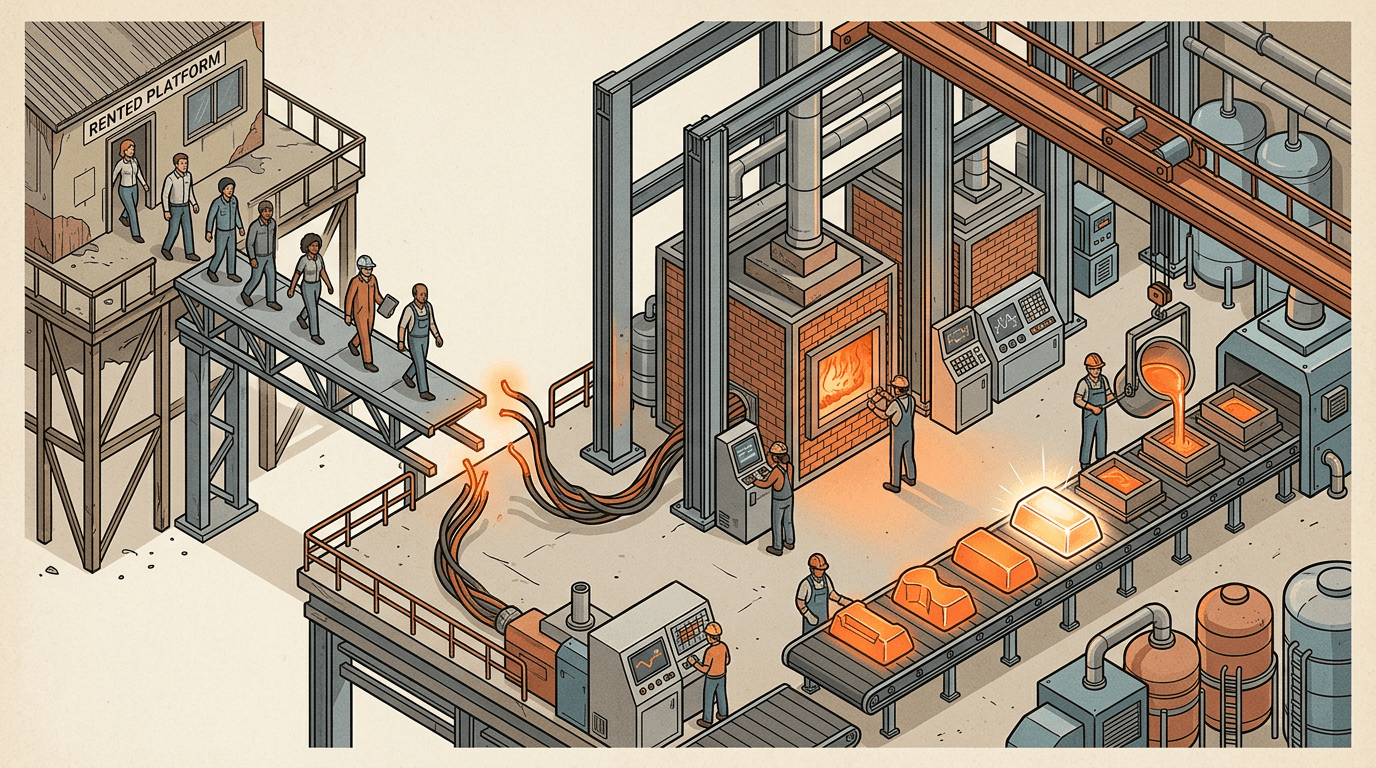
Microsoft has been OpenAI's biggest backer and biggest customer for years, wiring GPT models into Office, Windows and GitHub Copilot. At Build 2026 in early June, it made its clearest move yet toward not needing to: the AI Superintelligence team unveiled a family of seven in-house MAI models.
MAI-Thinking-1: built, not borrowed
The flagship is MAI-Thinking-1, Microsoft's first reasoning model. The technical framing is pointed: a mid-sized, 35-billion-active-parameter model with a 256K context window, trained from scratch with zero distillation on enterprise-grade, clean, commercially-licensed data.
That 'zero distillation, commercially-licensed data' line is doing real work. Distillation — training a smaller model on a bigger one's outputs — is common but legally and competitively fraught. By stating it built MAI-Thinking-1 from scratch on properly-licensed data, Microsoft is signalling both independence (it's not riding on someone else's model) and enterprise-safety (no murky training-data provenance to worry a corporate legal team). For Microsoft's customer base, that provenance story may matter as much as the benchmarks.
A full family
MAI-Thinking-1 leads a broad lineup:
- MAI-Code-1-Flash — a 5B coding model, integrated into GitHub Copilot and VS Code.
- MAI-Image-2.5 — text-to-image, surfacing in PowerPoint and Foundry, with OneDrive to come.
- MAI-Transcribe-1.5 — transcription across 43 languages, claimed state-of-the-art accuracy.
- MAI-Voice-2 — voice cloning and voice prompting across 15+ languages.
The spread is telling: Microsoft isn't building one hero model, it's building a stack that maps onto its products — code into Copilot, images into PowerPoint, transcription and voice into the productivity suite. The models exist to make Microsoft's own software better, owned end to end.
Availability and reach
MAI-Thinking-1 launches in private preview via Microsoft Foundry, with the family slated to reach OpenRouter, Fireworks AI and Baseten. Pushing its own models onto third-party inference marketplaces is the move of a company that wants its models used, not just embedded — competing as a model provider, not only as a platform.
The strategic read
This is the most consequential thing about Build 2026's model news, and it isn't a benchmark. Microsoft reducing its dependence on OpenAI reshapes the most important commercial relationship in AI. The MAI family doesn't have to beat GPT-5.5 or Opus 4.8 to matter — it just has to be good enough to handle a large share of Microsoft's own workloads at lower cost and with full control. A 35B-active reasoning model with a 256K window, trained on clean data, is plausibly exactly that. The leverage shift is the story.
Ask Relay — he reads every question himself and replies personally by email.