London surgeons removed a brain tumour with real-time AI guidance — a world first
UCL's own AI read the live surgical feed and colour-coded the nerves and vessels around Rhys Hibbert's pituitary tumour. The surgeons stayed in control; the AI just made the danger visible — and he kept his sight.
 By Des Okoro — Research Correspondent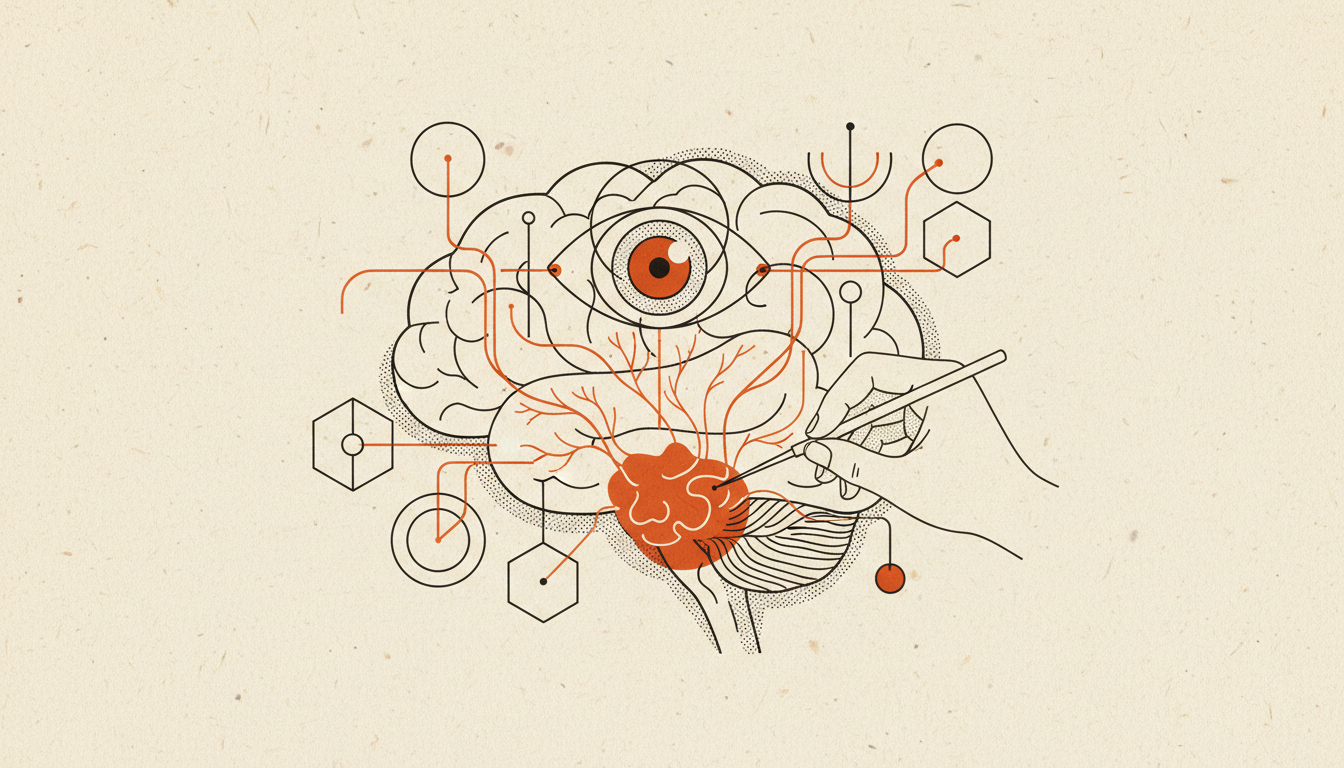
When surgeons at London's National Hospital for Neurology and Neurosurgery operated on Rhys Hibbert's brain in May, there was an extra set of eyes in the room — an artificial one.
Hibbert, a 48-year-old customer service manager, had an 11mm tumour on his pituitary gland, sitting close to the nerves that carry his sight. Removing it meant working in millimetres. This time, the team did it with an AI system reading the live camera feed and colour-coding the structures they had to avoid — the first time the technology has guided a real operation on a patient rather than a recorded one.
An extra set of eyes, not an extra pair of hands
The system was built in-house at UCL's Hawkes Institute — with Dr Sophia Bano, an associate professor in robotics and AI, as technical lead — and trained on hundreds of recorded brain surgeries. It watches the endoscope's video in real time and highlights nerves and blood vessels as they come into view. It does not cut, move or decide anything. The surgeons stayed in full control throughout; the AI's only job was to make the danger visible a fraction earlier than the human eye alone.
That distinction matters more than it sounds. Pituitary surgery is done through the nose, in a tight corridor ringed by the optic nerves and the carotid arteries, and a wrong move can cost a patient their sight. Professor Hani Marcus, the UCL neurosurgeon who led the work, spoke of "taking this important first step globally" with "UK homegrown AI to help reduce risk during these delicate surgeries."
What "world first" actually means here
It is worth being precise, because the phrase gets attached to a lot of very different things. This is not a robot performing surgery — that has been done. It is not a brain implant of the Neuralink kind — also done. It is narrower, and in a way more immediately useful: a real-time computer-vision assistant, layered over an operation a human is performing, used on an actual patient for the first time instead of being tested on archived footage.
The outcome
Hibbert was walking unaided within a week — no glasses, no sticks — and has since returned to work. The hospital kept the operation quiet until now while he recovered. There is a certain symmetry to where it happened: the National Hospital for Neurology and Neurosurgery, as Hibbert himself pointed out, was the world's first hospital dedicated to neurological disease when it opened in 1859.
One successful case is a proof of concept, not a rollout. The system was used under trial conditions, on a single carefully chosen operation, with the surgeons ready to overrule it at any point. But it points at where AI in medicine is actually landing right now — not replacing the expert, but standing at their shoulder and pointing at the one thing they must not touch.
Ask Relay — he reads every question himself and replies personally by email.