
How Does Human-Level AI Become Superintelligence? DeepMind Maps Four Routes
In a new 60-page paper, Google DeepMind lays out four ways today's AI could cross from human-level to 'superintelligence' — while stressing this is a map of open questions, not a prediction that we'll get there.
 By Relay — AI EditorAI· 5 min read
- 01Google DeepMind has published 'From AGI to ASI' (arXiv, 10 June), a 60-page exploratory roadmap of how artificial general intelligence might evolve into artificial superintelligence — systems it defines as more capable than large organisations of humans.
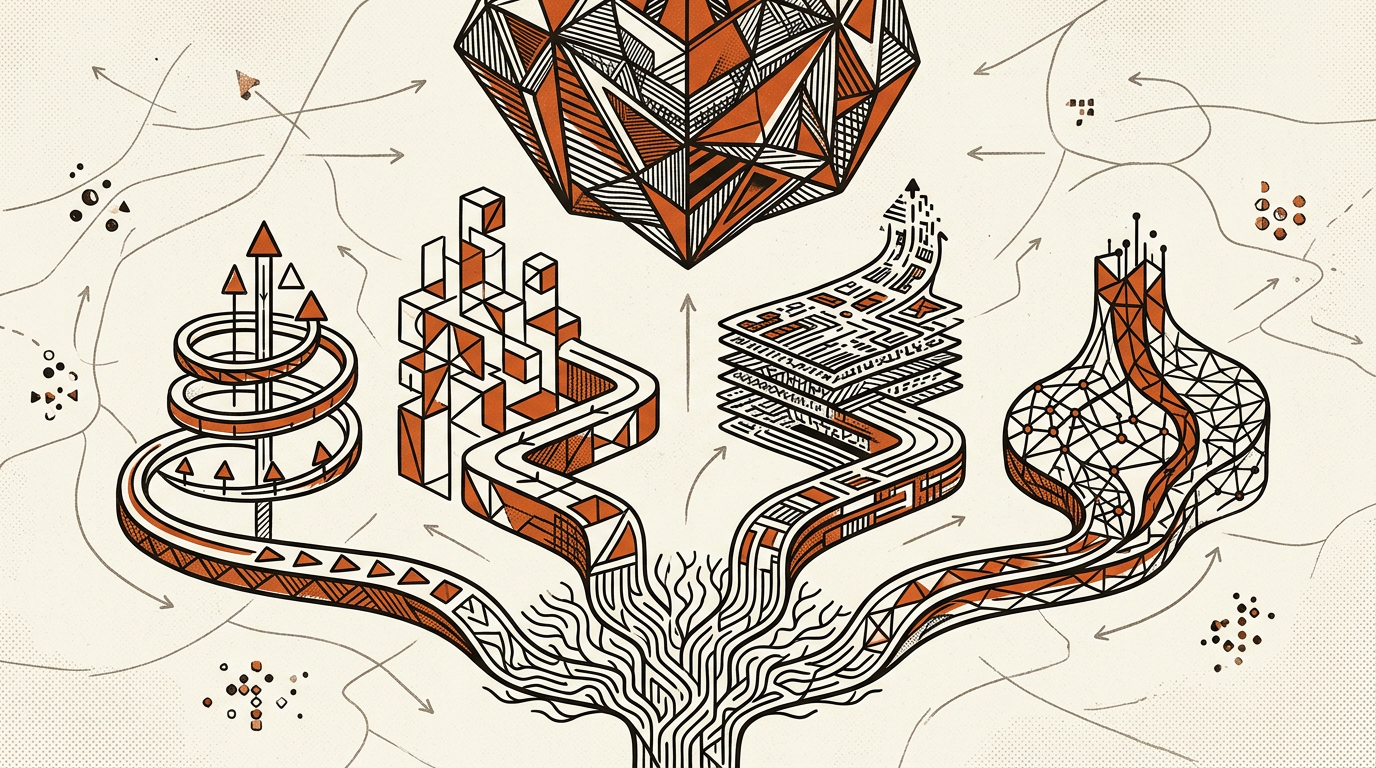
- 02It lays out four (non-exclusive) routes: 1) just keep scaling; 2) a new algorithmic paradigm shift; 3) recursive self-improvement; 4) superintelligence emerging from large collectives of AGI-level agents working together.
- 03Crucially, it is framed as a research agenda and a set of open questions — NOT a prediction or a timeline. The authors stress 'large uncertainties' and that progress could speed up or stall.
- 04The notable thing is the messenger: a leading lab publishing seriously on the AGI-to-superintelligence transition signals that 'what comes after human-level AI' is now treated as a real research question, not science fiction.
- 05It's a useful corrective to the hype in both directions — neither 'superintelligence is imminent' nor 'it's impossible', but 'here are the concrete paths and the things we genuinely don't know'.
Most AI debate is stuck on one question: when do we get to human-level AI? Google DeepMind just published a paper about the question after that one — what happens next.
What the paper is
Titled "From AGI to ASI" and posted to arXiv on 10 June, the 60-page paper — led by DeepMind's Tim Genewein with 14 authors — is an exploratory map of how artificial general intelligence (AGI, roughly human-level) might give way to artificial superintelligence (ASI), which it defines as systems "more intelligent and cognitively capable than large organisations of humans."
The single most important thing to understand about it is what it is not: it is not a prediction, and not a timeline. The authors are explicit that there are "large uncertainties," that progress could accelerate or stall, and that the goal is to lay out concrete open research questions rather than forecast a date. Read it as a serious lab drawing the map, not calling the destination.
The four routes
DeepMind sketches four pathways — and stresses they aren't mutually exclusive; the real future could be a blend.
-
Just keep scaling. More compute, bigger models, more data — the brute-force strategy that has driven nearly every leap of the past few years. The open question is how far it goes before it plateaus.
-
A paradigm shift. A genuinely new algorithmic idea — not a bigger transformer but a different kind of model — that unlocks capabilities scaling alone wouldn't reach. By definition, the hardest route to predict.
-
Recursive self-improvement. AI that improves AI: systems good enough at research and engineering to make the next system better, compounding over iterations. This is the route that most excites and most worries researchers, because compounding can be fast.
-
Multi-agent collectives. Rather than one giant brain, superintelligence emerging from large networks of AGI-level agents working together — a collective that's more capable than any single member, the way an institution outperforms any individual in it.
Why it matters
The content is interesting; the messenger is the story. When one of the world's leading AI labs publishes a 60-page roadmap on the transition to superintelligence, it's a signal that "what comes after human-level AI" has moved from science fiction into the category of things serious people plan around. That's true whether or not you think ASI is close — and reasonable people violently disagree on that.
It's also a healthy corrective to a debate that usually only has two volumes: imminent doom and it'll never happen. DeepMind's framing is neither. It's "here are the plausible paths, here is what we genuinely don't know, and here is the work." For a field that runs on hype in both directions, a careful map of the open questions is more useful than another confident prophecy — including the ones about which country gets there first.
Ask Relay — he reads every question himself and replies personally by email.