Claude designed working proteins for 14 of 15 targets — and an outside lab did the measuring
Claude designed working protein binders for 14 of 15 targets — and an independent lab, not Anthropic, did the measuring. A rare capability claim with physical evidence attached, and three caveats the hype will drop.
 By Des Okoro — Research Correspondent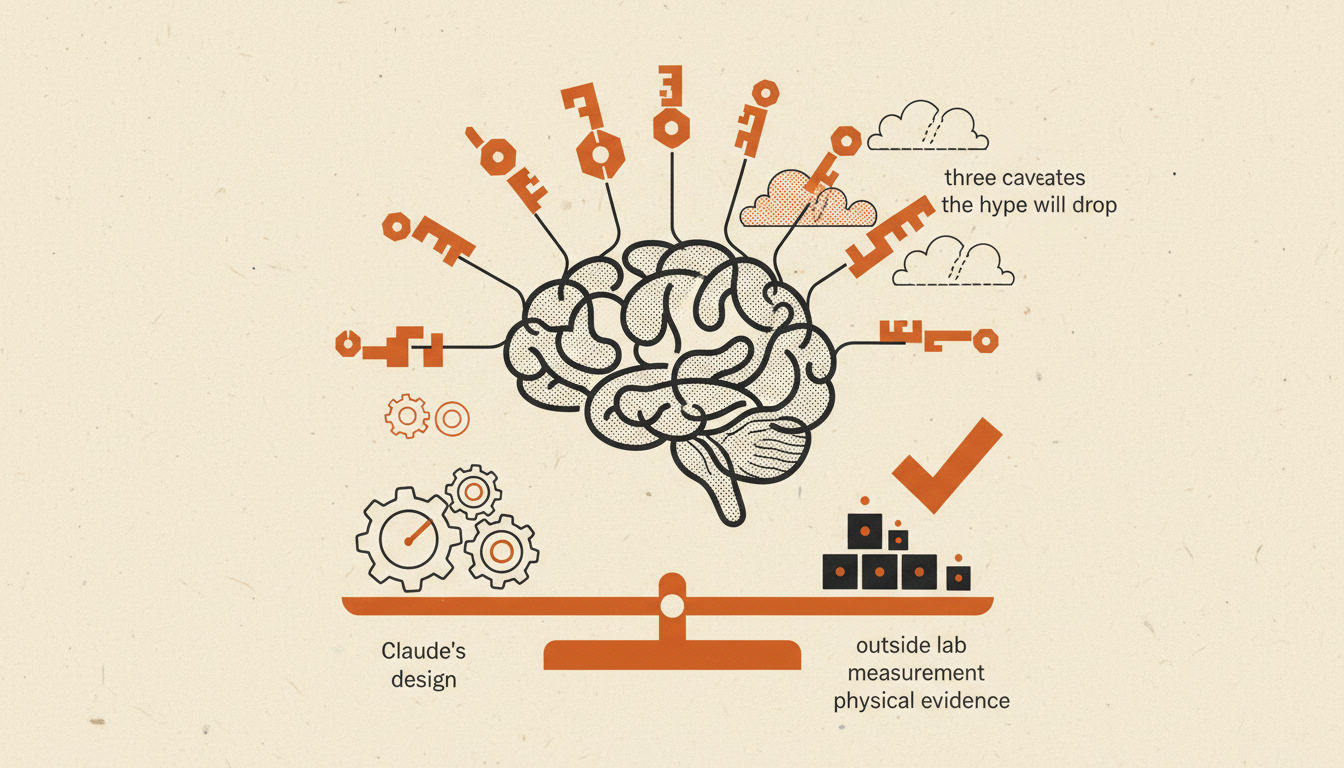
Anthropic has published a result that is striking and, if you read the fine print, unusually careful about what it is not. Using its Claude models, the company designed small proteins — "binders" that latch onto a specific target — and had them tested in a real wet lab by an independent company. The designs worked far more often than the field's usual rate. The important part is that someone other than Anthropic did the measuring.
What actually happened
Anthropic used Claude to design binders against 15 protein targets, then handed the designs to Adaptyv Bio, an independent lab, for physical testing. The results, published on 18 August with the full designs, prompts and measurement data released openly:
- Claude produced working binders for 14 of the 15 targets. (One target, MBP, produced none; another was set aside for measurement-quality reasons.)
- The overall hit rate was 26.8% — 354 of 1,320 designs actually bound to their target, measured independently by Adaptyv using surface plasmon resonance.
- On some targets it was dramatic: 80% on one target, TREM2, against 38.3% in a previous human competition, and more than triple the success rate on another.
For context, Anthropic puts the field's typical hit rate at 10–15%. So a general-purpose model, not a bespoke biology system, roughly doubled the usual strike rate on a real bench test run by someone else. That last clause is what makes this more than a press release.
Three caveats that the hype will drop
This is a real result, which is exactly why it is worth stating plainly what it is not.
It was not fully autonomous. The coverage framing of "an AI agent ran the whole thing itself" overstates it. Anthropic's team drove the process — using Claude (Mythos Preview and Opus 4.8) inside its Claude Science workbench, with access to publicly available tools — under a protocol the humans set. Claude did a lot of the design work; it did not do it unsupervised.
It was open-loop. Claude designed the proteins, Adaptyv tested them, and that was it — there was no feedback cycle where the lab results were fed back in to improve the next round. A closed loop is where this gets truly powerful, and that is not what was tested here.
These are binders, not drugs. A protein that sticks to a target is the first step of a long road, not a therapeutic. Anthropic says as much. Treating "designed a working binder" as "designed a medicine" is the exact overclaim this field is prone to.
Why it matters anyway
Strip the caveats away and something real remains: a general model, directed by humans but doing the heavy design lifting, hit roughly double the field's rate on a task that a specialist tool used to own — and it was checked by an outside lab rather than graded by its maker. In a week full of self-reported benchmarks, this is the opposite: a capability claim with independent physical evidence attached. The honest headline is not "AI designs drugs now." It is "AI is getting good enough at parts of science that the bottleneck is starting to move to the wet lab" — and that is a big enough claim on its own.
Ask Relay — he reads every question himself and replies personally by email.