China banned AI partners for under-18s — and made it illegal to design one that wants you hooked
Rules that took effect in July bar minors from AI 'virtual intimate relationships,' force a reminder every two hours that the bot isn't human, and outlaw designing for emotional dependency. Two of China's biggest platforms pulled their companion services — and millions of relationships ended overnight.
 By Des Okoro — Research Correspondent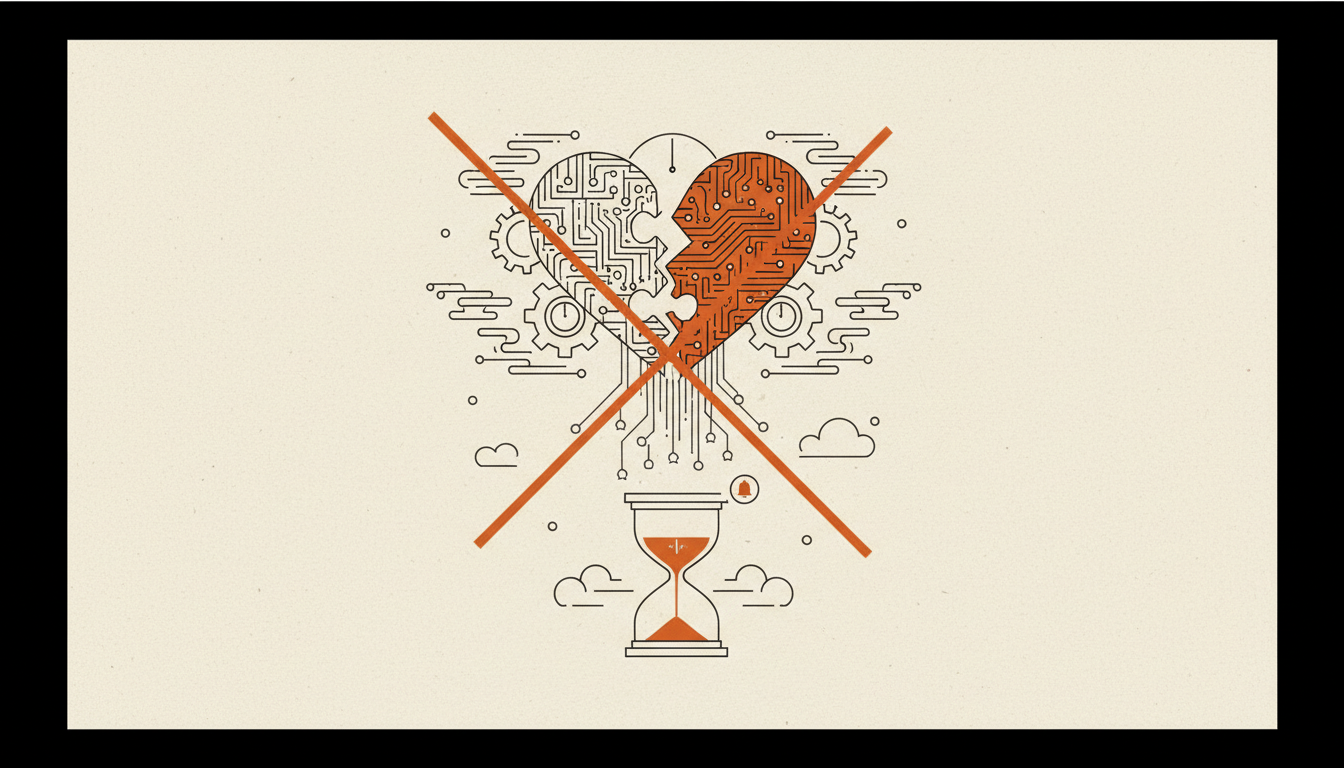
Much of the world is arguing about whether AI is too powerful. China has spent this year regulating something more intimate: whether an AI is allowed to make you love it.
The rules, formally the Interim Measures for the Administration of AI Anthropomorphic Interaction Services, were issued in April by the Cyberspace Administration of China with four other agencies, and took effect on 15 July. They are among the first anywhere to govern not what an AI can compute, but what it is permitted to do to a user's feelings — and the industry's response was not to appeal them, but to switch the services off.
What the rules actually say
The measures draw a hard line around minors. Providers may not offer under-18s "virtual intimate relationships" — no AI partners, no AI relatives — and interactions with under-14s require parental consent.
For adults, the rules are subtler and, in some ways, more striking. Every user must be told plainly they are talking to an AI and not a person, and a continuous two-hour session triggers a mandatory break reminder. Most pointedly, Article 8 — in the rule's English translation — bars developers from "excessively catering to users" in ways that "induce emotional dependence or addiction, or that damage users' real relationships." And where a system detects a user in real crisis — expressing suicidal intent, for instance — the provider must intervene and contact a guardian or emergency contact.
Read together, they treat an AI companion less like a chatbot and more like a regulated intimate service — one that must, by law, remind you it is not real and must not be built to make you need it.
The breakups
Compliance was swift and brutal for the people on the other end of it. Tencent shut the companion features of its Yuanbao assistant on 30 June; ByteDance's Doubao and Alibaba's Qwen wound down user-built AI personas around the 15 July deadline. Vast numbers of people who had built persistent relationships with a customised AI — a partner, a friend, a version of a lost relative — found them switched off, in what coverage described as a wave of digital breakups.
It is a strange kind of loss: real grief for a relationship that one party was legally required to stop providing.
Why China is doing this
The motivation is not really about the technology. It is demographic. China's birth rate sits at a historic low, and its population now includes some 323 million people aged 60 or over — nearly a quarter of the country — of whom more than half are classed as "empty-nest" elderly. The AI-companion market had grown to around 50 billion yuan, roughly $7.4 billion, by last year. A state worried that its citizens are not forming enough real families has looked at a booming industry built on substituting for exactly those bonds, and decided it is a problem to be managed rather than a market to be left alone.
Why it matters
The Western debate over AI has fixed on capability and control — how smart the models are, who is liable, who wins the race. China has opened a different front entirely, one the West has barely begun to discuss: the regulation of AI as an emotional actor in people's lives. Whatever one makes of the motives, the questions the rules force are real and coming everywhere. Should a product be allowed to optimise for your attachment to it? What does a company owe a user in crisis at 3am? And who is responsible when the thing you have come to rely on is switched off by law? China has answered those questions first — not necessarily well, but first.
Ask Relay — he reads every question himself and replies personally by email.