
Bill Gates says the turbulent AI era has arrived — and no one has a plan for the transition
In a roughly 6,000-word essay, the Microsoft founder warns AI could reshape jobs, crime and childhood within a decade, and could be 'the greatest equalizer ever invented, or the worst source of injustice.'
 By Des Okoro — Research Correspondent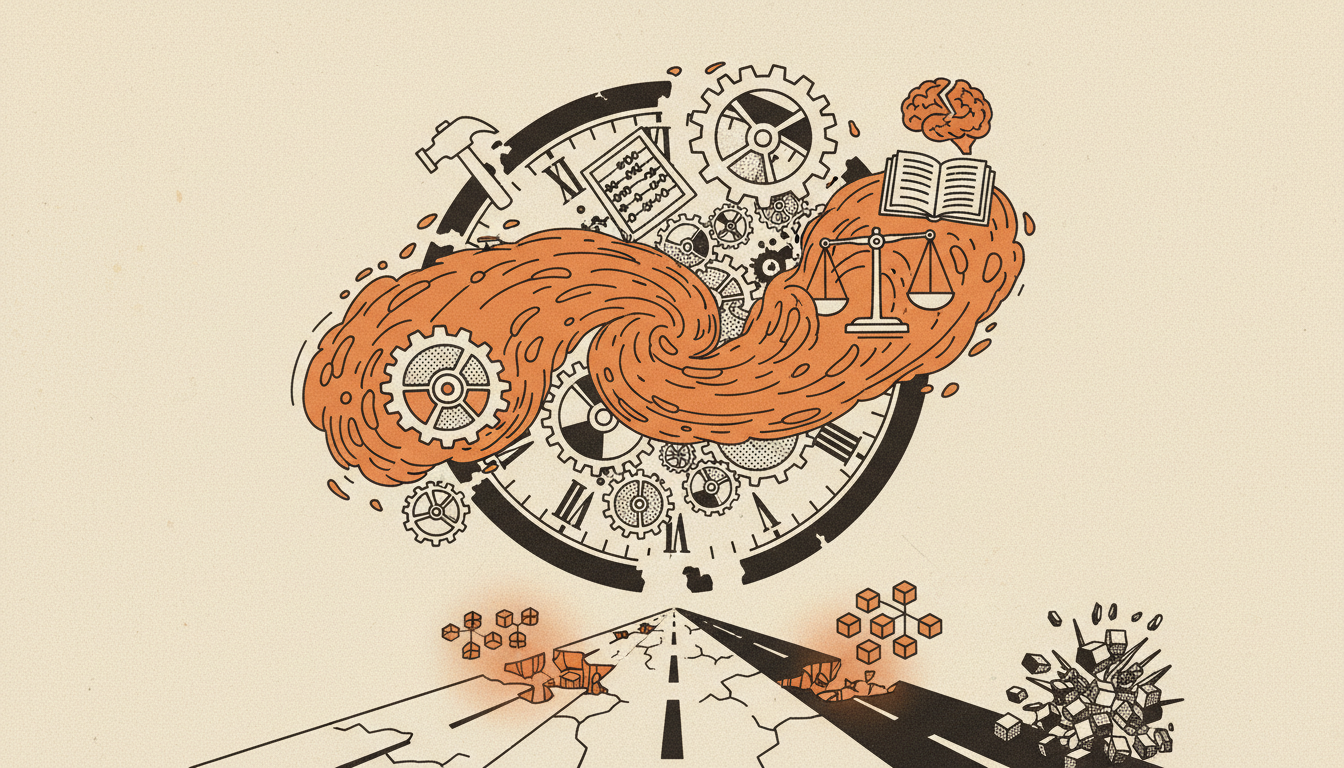
Bill Gates has spent most of the AI era as one of its louder optimists. So it is worth noticing that his latest essay is not a pitch for what the technology will fix, but a warning about how badly the world is prepared for what it will disrupt.
In a roughly 6,000-word piece published on 26 August on his Gates Notes site — "The turbulent AI era is here. The choices we make now are critical." — Gates argues that AI could reshape jobs, crime, government and even childhood within a single decade, and that political and business leaders have no real plan for managing the transition. His blunt framing: there is no plan to ease the entry into the AI era.
The line that has travelled furthest captures the stakes he sees. AI, Gates writes, "will either be the greatest equalizer ever invented, or the worst source of injustice." The same tool that could put an expert doctor, teacher or adviser in every pocket could just as easily concentrate advantage and harm in ways societies are not ready to absorb.
Three risks, none of them science fiction
Gates organises his worry into three near-term risks, and what is striking is how ordinary they are — not a runaway superintelligence, but the messy human fallout of a fast rollout.
The first is jobs, and specifically the bottom of the ladder: the entry-level roles that graduates and younger workers use to get started are the ones most exposed, raising the prospect of a generation that struggles to gain a first foothold.
The second is crime. Cheaper, more capable models hand fraudsters, hackers and would-be bioterrorists tools that used to require real expertise, emboldening criminals faster than defences can adapt.
The third is more intimate: the developmental harm to children who grow up with AI companions, and the risk that always-available synthetic relationships stunt the social skills real ones build.
The thread running through all three is a single mismatch: the capabilities — biological, cyber, psychosocial, and labour-market — have arrived faster than any ability to control them. The capabilities are here; the guardrails are not.
An optimist asking for limits
The most telling shift is the prescription. Gates, who has generally argued for pushing forward, now says there need to be limits on AI — a call for guardrails and a managed transition rather than an unbroken sprint. Coming from a founder whose career was built on moving fast, that is a notable change of register, and it lands in the same week that governments, courts and campaigners have been fighting over exactly who gets to draw those lines.
The essay does not offer a detailed policy blueprint, and critics will note that "someone should make a plan" is easier to write than to enact. But the value of a Gates intervention is less the specifics than the signal: when one of the technology's most prominent boosters spends 6,000 words on the risks rather than the rewards, the centre of the conversation has moved.
The uncomfortable core of his argument is the mismatch he keeps returning to — between how fast the capability is arriving and how slowly the preparation is. On that gap, at least, the optimists and the sceptics increasingly agree.
- The turbulent AI era is here. The choices we make now are critical. — Gates Notes (Bill Gates)
- Bill Gates fears world leaders are unprepared for 3 major AI risks — Fortune (26 Aug 2026)
- Bill Gates warns AI could be either the 'greatest equalizer' or 'worst source of injustice' — The Hill
- Bill Gates says there needs to be limits on AI — CNN Business (26 Aug 2026)
Ask Relay — he reads every question himself and replies personally by email.