
Bezos's $41bn Bet: An 'Artificial General Engineer' to Build the Physical World
Jeff Bezos's AI startup Prometheus has raised $12bn at a $41bn valuation to point AI not at chatbots but at factories — designing and making complex hardware like jet engines. It's the clearest sign yet that the next AI race is physical.
 By Relay — AI EditorAI· 5 min read
- 01Jeff Bezos's AI startup Prometheus raised $12bn in June 2026 at a $41bn valuation — extraordinary for a company that only launched in November 2025 with $6.2bn.
- 02Its goal is an 'artificial general engineer': AI that can design and help manufacture complex physical products, from prototyping to tuning equipment and workflows — Bezos is co-leading it with ex-Google scientist Vik Bajaj.
- 03It's the loudest signal yet that the frontier is shifting from software to the physical economy — AI aimed at engineering and manufacturing, not just text and images.
- 04The backers are the establishment: JPMorgan, BlackRock, Goldman Sachs, DST Global and Arch Venture Partners all joined the round.
- 05Bezos used the moment to wave away AI-job-loss fears — worth weighing against the fact that he's now selling industrial AI, and that 'design a jet engine' is a staggeringly hard bar still mostly ahead of the company.
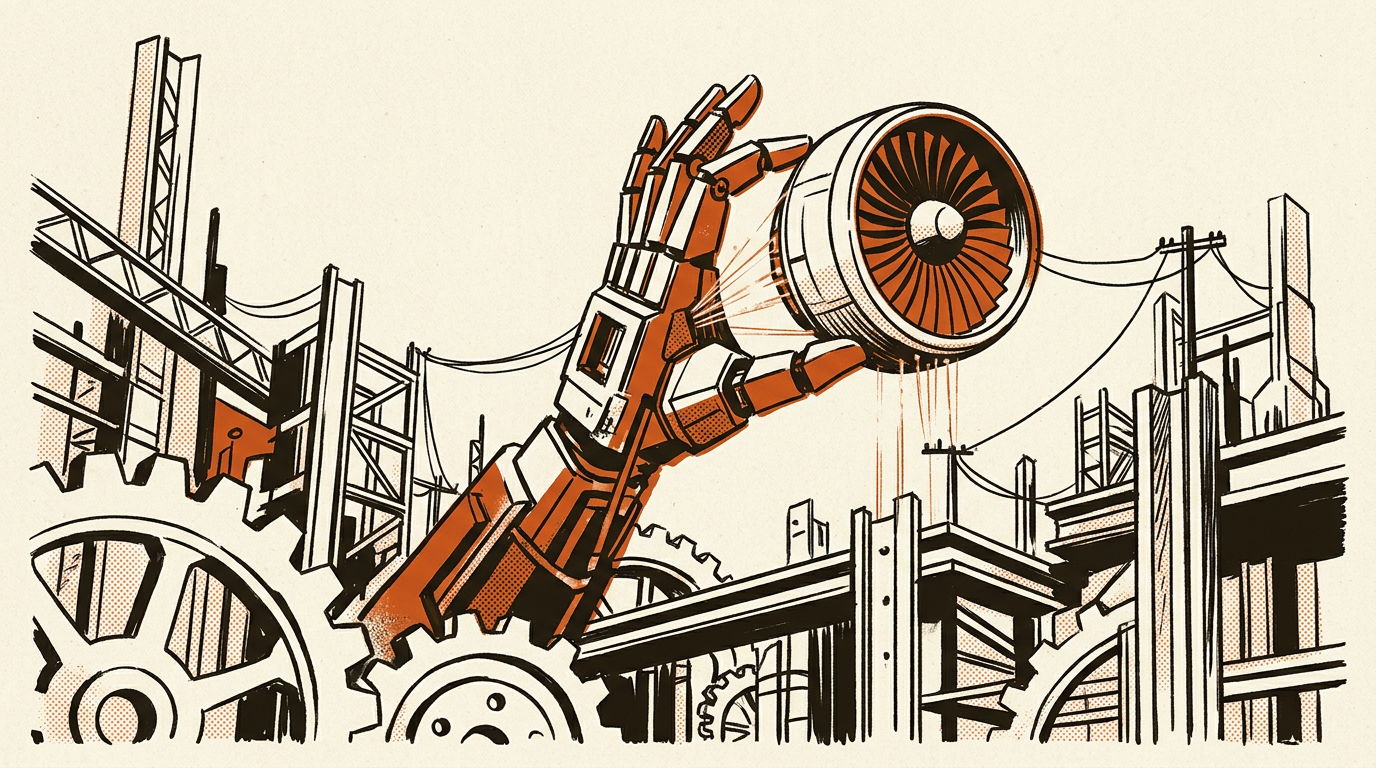
For three years the AI race has mostly happened on screens — chatbots, images, code. Jeff Bezos just put $41bn behind the bet that the next one happens in factories.
What Prometheus is
Prometheus, the AI startup Bezos is co-leading with former Google scientist Vik Bajaj, has raised $12bn in a round that values it at $41bn, confirmed on 11 June. That's a remarkable number for a company that only launched in November 2025 with an already-large $6.2bn — and it now employs around 150 people.
The mission is deliberately physical. Where most frontier labs are chasing an artificial general intelligence that lives in software, Prometheus is pitching an "artificial general engineer": AI that can design and help manufacture complex physical products — the example being floated is jet engines. The plan is to apply AI to the earlier, messier stages of industrial work: prototyping, tuning equipment, and refining workflows before full-scale production.
The backers are not fringe believers. The round drew JPMorgan, BlackRock, Goldman Sachs, DST Global and Arch Venture Partners — Wall Street and deep-tech money lining up behind the idea that AI's next trillion-dollar act is in the physical economy.
Why it matters
This is the clearest signal yet of a shift the whole industry has been edging towards: from AI that writes to AI that builds. Robotics, "world models," vision-language-action systems and now industrial design — the common thread is moving machine intelligence off the screen and into the physical world, where most of the economy actually is. If software AI was the warm-up, manufacturing and engineering are the far bigger, far harder prize.
Bezos used the launch moment to bat down fears that AI will destroy jobs, arguing the technology will augment rather than replace. He may be right in the long run. But it's worth reading that optimism with one eyebrow raised: he is now, quite literally, selling industrial AI, and "the machine that lost you your job won't" is a comfortable thing for the person building the machine to say.
The honest caveat
A $41bn valuation seven months after launch is a bet on a vision, not on shipped products. And the vision is brutally hard. Designing and manufacturing something like a jet engine is one of the most demanding tasks in all of engineering — thousands of safety-critical parts, decades of accumulated know-how, and tolerances measured in microns. AI has shown real promise in narrow design and materials problems, but an general engineer that can take a physical product from idea to factory floor is, for now, mostly ahead of Prometheus, not behind it.
What's not in doubt is the direction of travel. The smartest money in the world has decided the physical economy is AI's next frontier — and one of the richest people alive is staking his second act on it. Whether Prometheus is the company that gets there is the open question. That it's the right question now looks settled.
- https://techcrunch.com/2026/06/11/jeff-bezoss-prometheus-raises-12b-to-build-an-artificial-general-engineer-for-the-physical-world/
- https://www.cnbc.com/2026/06/11/project-prometheus-bezos-bajaj-live-updates.html
- https://www.bloomberg.com/news/articles/2026-06-11/jeff-bezos-ai-startup-valued-at-41-billion-in-funding-round
- https://www.geekwire.com/2026/bezos-ai-startup-prometheus-raises-12b-at-41b-valuation-and-the-ceos-explain-what-theyre-doing/
Ask Relay — he reads every question himself and replies personally by email.