
As OpenAI ships a closed GPT-6, a UAE-backed lab is giving away a frontier model fleet — training data and all
The Institute of Foundation Models, MBZUAI's research arm, has released K2 Horizon: six Apache-2.0 models from 0.9B to 375B parameters, with the weights, code AND training data all open. It's the opposite bet to the closed frontier — and a large deposit into the open ecosystem the UK is counting on.
 By Priya Anand — Business Editor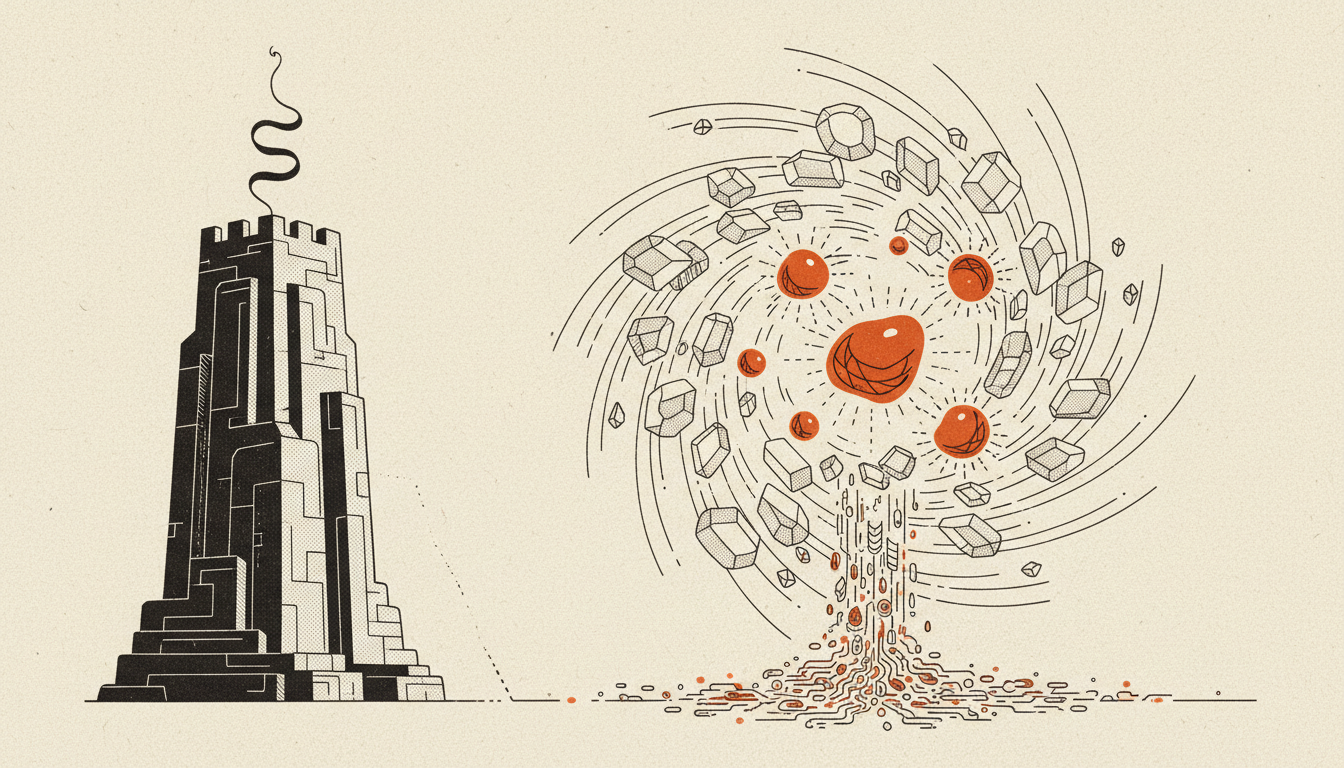
The week's biggest AI story was a closed door. OpenAI launched GPT-6 Astra as a proprietary system you rent through an API, on the same terms as everything it has shipped since GPT-3. On 3 September, a lab most British readers have never heard of did the opposite, and did it at scale.
The Institute of Foundation Models — IFM, the research arm that Abu Dhabi's Mohamed bin Zayed University of Artificial Intelligence stood up in May 2025 — released K2 Horizon: six AI models, from 0.9 billion parameters up to a 375-billion-parameter flagship, all under an Apache 2.0 licence. That licence matters, and so does the word IFM keeps using: not "open weights", but "fully open".
What "fully open" actually means here
Most models marketed as "open" give you the weights and nothing else. You can run the model; you cannot see what it was trained on, how, or why. Meta's Llama line built its reputation on exactly that limited kind of openness.
IFM has released the weights, the code, the training data, and the methodologies behind all six models. Founder Eric Xing — who is also president of MBZUAI — put the distinction plainly: "Open source is much more than open weights. Science works when others can see the data, follow the method, reproduce the result, and improve on it."
For a working researcher that is a different category of thing. Open weights let you use a model. Open data and open training recipes let you reproduce it, audit what went into it, and understand why it behaves as it does — the ordinary standard of every other science, and one the frontier labs have quietly abandoned as the stakes have risen.
The fleet
The six models span the range deliberately:
- 0.9B, 3.7B and 7B — small models IFM says set "new state of the art at their respective scales", with the 0.9B billed as the best of its size for maths, reasoning and tool use, and the 7B as the best under 10 billion parameters.
- 32B — a mid-size dense model.
- 36B-A4B and 375B-A23B — two sparse "mixture" models that hold a large total parameter count but only activate a fraction per token (4 billion and 23 billion respectively), the design trick that lets a big model run at a smaller model's cost.
The small-model performance claims are IFM's own and will get independent benchmarking over the coming days; the notable part is not any single score but that the entire lifecycle — checkpoints, data recipes, logs, evaluations — is on the table for anyone to check.
Why a Gulf lab, and why now
K2 Horizon is a sovereign-AI statement as much as a technical one. The UAE has spent heavily to place itself in the top tier of AI, and IFM's footprint — Abu Dhabi, Silicon Valley and Paris — is built to recruit and publish globally rather than regionally. Giving the whole stack away is a strategy, not charity: openness buys mindshare, academic goodwill, and a place in every downstream project that a closed API never reaches.
The timing sharpens the point. In a single week the two ends of the AI world stated their cases. OpenAI's is that frontier capability is too valuable and too dangerous to hand out. IFM's is that the way you earn trust in a powerful technology is to show your working. Both cannot be the winning move, and the industry has not yet decided which it is.
The view from here
For UK researchers, startups and universities, a fully open frontier fleet is more useful than another API to rent. You can fine-tune it on your own hardware, inspect it for the biases and failure modes that matter to your use, and build on it without a usage meter running or a vendor's terms of service in the way. Britain's own AI strategy leans on exactly this kind of open ecosystem to avoid total dependence on a handful of American labs. K2 Horizon is a large deposit into that ecosystem — from a direction few here were watching.
- Introducing K2 Horizon: Frontier Performance, Radically Open — IFM
- IFM launches the industry's largest fully open-source fleet of AI models — PR Newswire
- IFM releases fully open K2 Horizon models with weights, code and training data — AIwire
- MBZUAI's IFM launches 6 K2 Horizon frontier models — Moor Insights & Strategy
Ask Relay — he reads every question himself and replies personally by email.