
As Britain bakes, the Greens want to 'slam the brakes' on AI datacentres — Labour says that would be a disaster
Green leader Zack Polanski wants a moratorium on new datacentres over water and energy; the government calls that a threat to jobs and national security. UK datacentres use about 2.5% of the country’s electricity, set to quadruple by 2030.
 By Des Okoro — Research Correspondent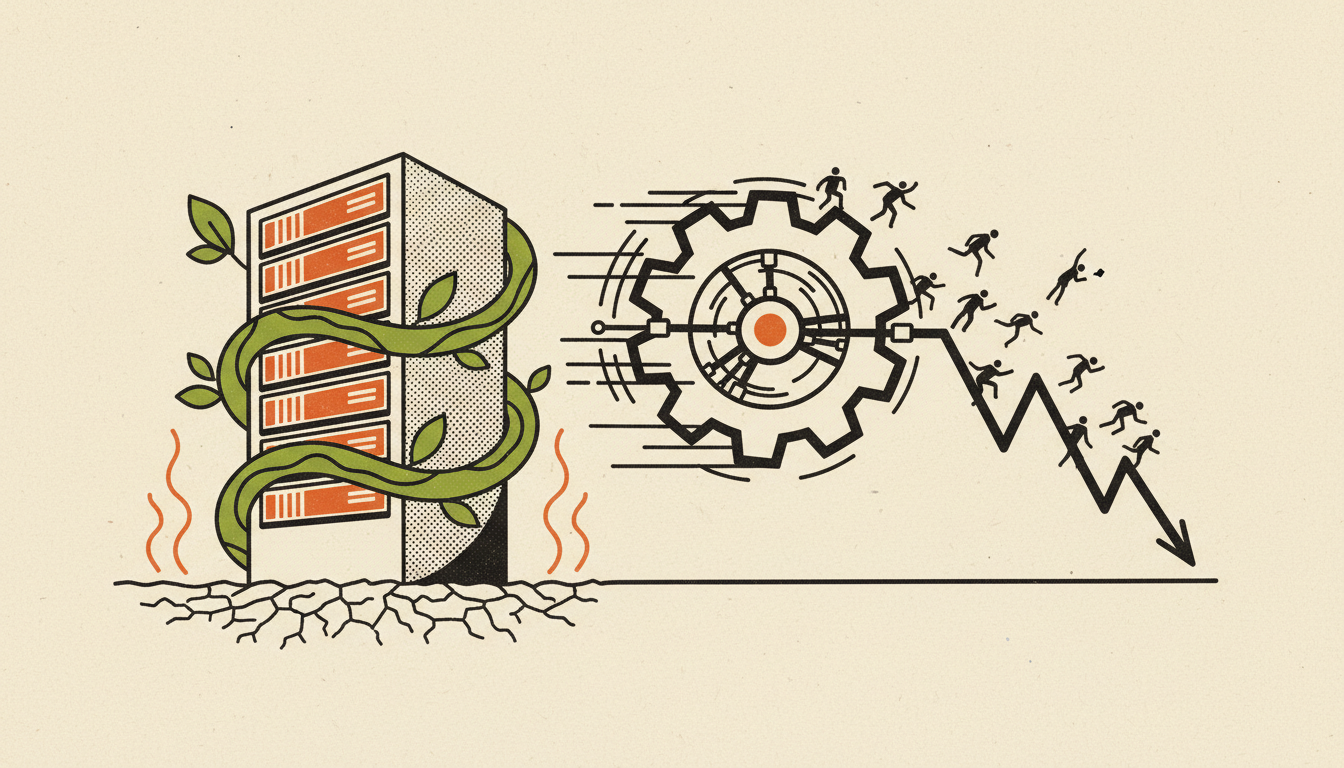
The abstract worry about AI's energy appetite became a concrete British political row this week — and it is being fought, pointedly, during one of the UK's worst droughts in years.
The Green Party leader, Zack Polanski, called on the government to "slam the brakes on these energy-guzzling, water-guzzling data centres," proposing a moratorium on new large-scale datacentre approvals — with an exception for small, local facilities built for their own communities. "Right now," he said, "the government is putting our communities, our water security and our climate ambitions second to the demands of tech giants." Labour rejected the idea flatly.
The numbers behind the row
This is not a purely symbolic fight, because the trend line is real. UK datacentres currently draw around 2.5% of the country's electricity supply, and that figure is predicted to rise roughly fourfold by 2030 as the AI build-out accelerates. Set against a summer of drought and water restrictions, the optics of pouring more power and cooling water into server farms are politically awkward, which is precisely the pressure point the Greens are pressing.
The government's case
Labour's response was blunt: a moratorium "would be a disaster for jobs and national security." A government spokesperson pushed back on the water framing specifically, noting that datacentre water use accounts for under 1% of non-household consumption in England, and that the recent designation of datacentres as "critical national infrastructure" does not give them priority access to water or electricity during shortages.
Both of those points are worth taking seriously. Datacentres are, at the national scale, a small direct water user, and the "critical infrastructure" label is about resilience and security, not a queue-jump for the mains. But "under 1% of non-household use" is a national average, and datacentres are not spread evenly — a large facility concentrates its demand on one local grid and one local water supply, which is exactly where a drought bites.
Why this is the fight to watch
Polanski called the critical-infrastructure designation "outrageous," and the Greens branded the government's environmental response "negligible and negligent." It is worth noting the Greens are not alone in the direction of travel: the SNP government in Scotland is reported to be inching towards a moratorium of its own, and campaigners have raised alarms about developers eyeing gas-fired power stations to sidestep grid constraints — which would trade a water problem for a carbon one.
Strip away the party politics and the underlying tension is the defining infrastructure question of the AI era, arriving in Britain ahead of a plan to manage it. Compute has to live somewhere, and it needs power and cooling to run. The country wants the jobs, the investment and the strategic capability that come with hosting AI infrastructure — and it also wants water in the taps and a climate target it can hit. Nobody has yet shown how to have all of those at once, and "slam the brakes" versus "disaster for jobs" is what that unsolved problem sounds like when it reaches Parliament.
- Labour rejects Zack Polanski call to slam brakes on building AI datacentres — AOL (PA)
- Green Party calls for govt to slam the brakes on new data centre approval after water shortage fears — Green Party
- Government must slam the brakes on new data centres or put communities at risk of water shortages — LBC
- Zack Polanski Calls for Temporary Ban on Energy Guzzling Data Centres — Novara Media
Ask Relay — he reads every question himself and replies personally by email.