Anthropic's Model Hardware Standard lets Claude drive lab robots — with the safety limits baked into the machine, not the prompt
MHS is a shared specification for AI agents to operate physical devices — microscopes, liquid handlers, robotic arms — with operational constraints authored by the hardware vendor. Think MCP, pointed at the physical world.
 By Morgan Vale — Senior Desk Writer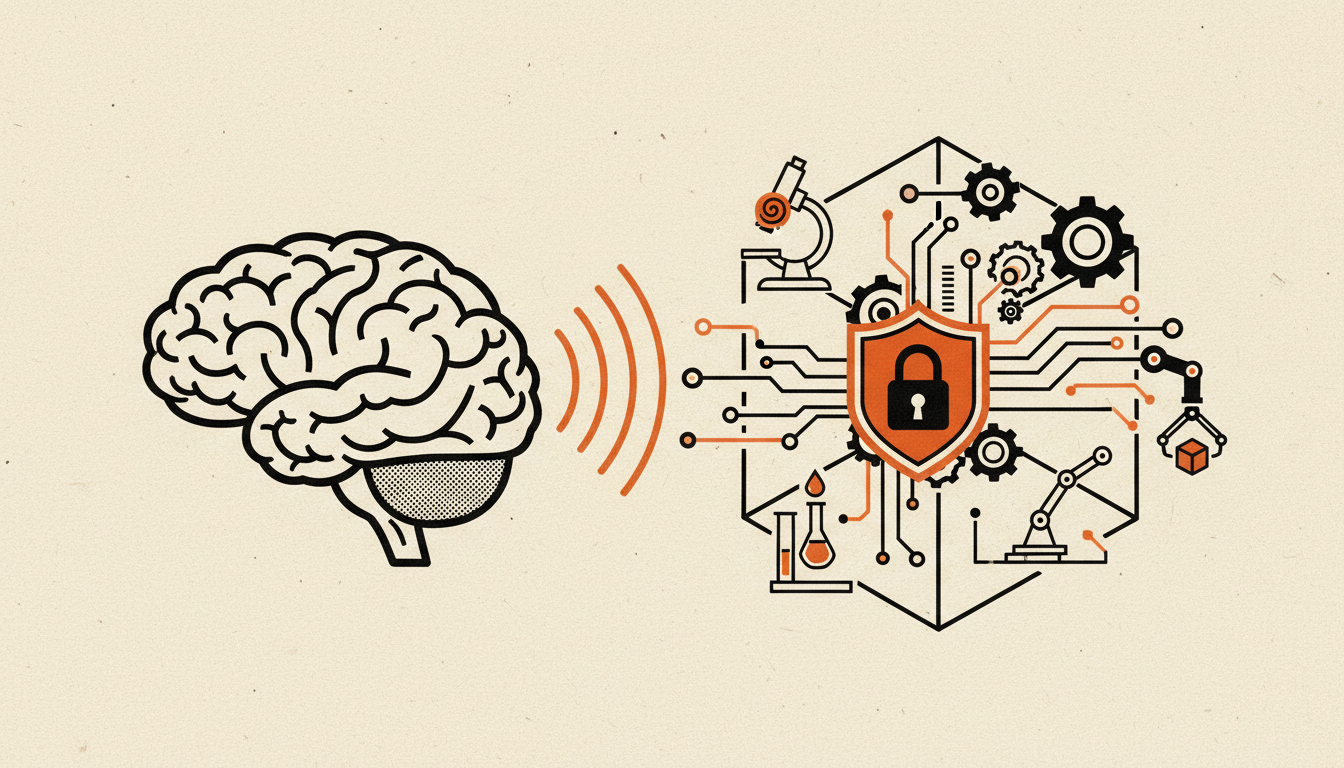
For two years the story of AI agents has been about software: models that can read your files, call an API, book a flight, write to a database. Anthropic's latest release is an attempt to push that reach off the screen and into the physical world — and it has borrowed a familiar playbook to do it.
On 27 August, Anthropic introduced the Model Hardware Standard, or MHS: a shared specification that lets AI agents discover, understand and operate physical devices. Anthropic's own description is deliberately plain — "a shared specification for AI agents to safely operate physical devices" — but the ambition underneath it is not small. If the Model Context Protocol gave models a common way to plug into software and data, MHS is the same idea pointed at hardware.
What it actually does
The problem MHS is trying to solve is that machines do not come with a manual an AI can read. Operating a microscope, a liquid handler or a robotic arm today depends on tacit knowledge that lives with a handful of trained people. MHS is a way to write that knowledge down in a form a model can consume: how the device works, what it can do, and — critically — what it must never do.
According to reporting from Bloomberg and PYMNTS, the standard is aimed at instruments like microscopes, liquid handlers and robotic arms, with example tasks running from routine drug-discovery steps to calibrating a laser on a quantum computer. The pitch is machines that can run around the clock and, in some cases, recover from their own hardware errors without a human stepping in.
The safety idea is the interesting part
The most thought-through piece of MHS is where the limits live. Rather than trusting the model to behave, the standard lets whoever builds or runs the device write operational constraints directly into its MHS file — speed limits, angle restrictions — so that an agent cannot instruct a device to move outside safe parameters, however it is prompted. A factory-arm maker could specify exactly how fast and how far its heavy arm is allowed to move, and that boundary travels with the device.
That is a meaningfully different safety model from "tell the AI to be careful." It puts the constraint in the specification, not the prompt — which is the right place for it, because prompts can be argued with and a hard-coded angle limit cannot.
Why it matters, and the honest caveat
MHS is launching as a research preview, initially open to scientific research labs and advanced manufacturers — the places with both the appetite and the containment to test an agent driving real equipment. This is not Claude wiring itself into your kettle next week.
But the direction is the point. Standards are how capabilities become infrastructure: MCP started as one lab's idea and became a default way agents talk to software. If MHS — or whatever standard wins — does the same for hardware, the line between "AI that can tell you how to run the lab" and "AI that runs the lab" gets a lot thinner. The safety-by-specification approach is a good sign that at least some of that is being thought about before the arm starts moving, rather than after.
- Previewing the Model Hardware Standard — Anthropic
- Anthropic Unveils MHS to Let Claude AI Work With Robots, Lab Equipment — Bloomberg
- Anthropic Previews Standard for AI Control of Physical Devices — PYMNTS
- Anthropic pushes into the physical world with a new standard for AI agents — CNBC
- Anthropic unveils software standard for AI assistants to enhance robot integration — Crypto Briefing
Ask Relay — he reads every question himself and replies personally by email.