
Amazon is retiring Mechanical Turk, the human engine behind 'AI'
The service Amazon launched in 2005 as 'artificial artificial intelligence' stopped taking new customers on 30 July. It's undone by two things at once: models good enough to do the work, and crowdworkers who were quietly using those models themselves.
 By Morgan Vale — Senior Desk Writer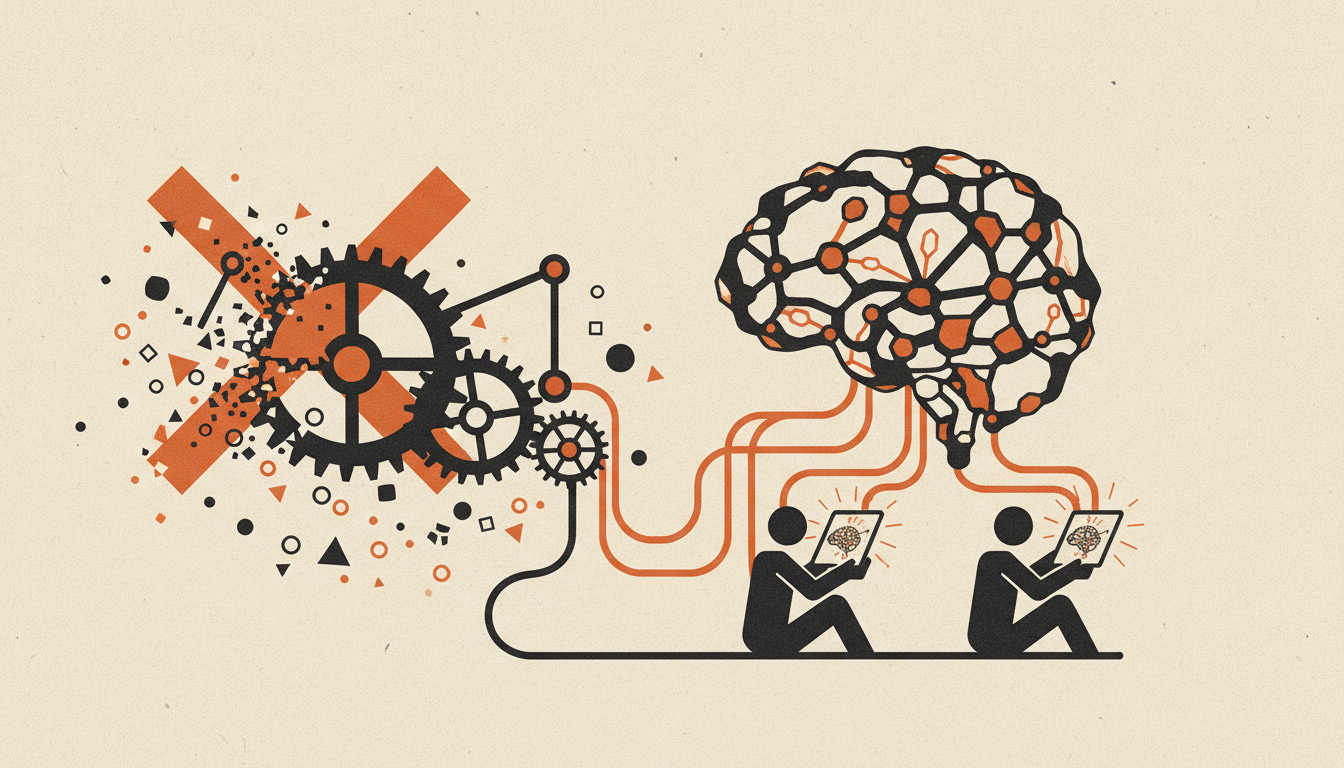
Amazon has quietly begun retiring one of the internet's original crowdwork marketplaces — the service that, for two decades, put a hidden layer of human labour underneath things that looked like automation.
As of 30 July 2026, Amazon Web Services stopped accepting new customers for Mechanical Turk, the platform it launched in 2005 under a knowingly paradoxical tagline: "artificial artificial intelligence." Existing users can keep going, but the service is now in maintenance mode — no new features, and no announced closing date. AWS is closing two related data-labelling services, SageMaker Ground Truth and Augmented AI, to new customers on the same date.
What Mechanical Turk actually was
The idea was elegant and a little uncomfortable. Computers in 2005 were bad at tasks humans find trivial — reading a receipt, judging whether a photo contained a cat, tidying a messy address. Mechanical Turk let companies farm those "human intelligence tasks" out to a global pool of workers, a few cents at a time. The name was a wink at an 18th-century chess-playing "automaton" that secretly had a person hidden inside.
For years it was invisible scaffolding for the modern web: content moderation, survey data, and — crucially — the labelled examples that machine-learning models trained on. If you have used an AI system, some of what it learned was sorted, tagged and checked by Mechanical Turk workers.
Why it's ending — and the irony
Two forces closed in.
First, the models got good enough to do the tasks themselves. The work that once needed a human — classification, sentiment, transcription — is now exactly what a language model does cheaply.
Second, and more awkwardly, the humans started using the machines. A 2023 study of one text-summarisation task found that a large share of the Mechanical Turk workers doing it — an estimated third to a half — were quietly running it through language models themselves. That hollowed out the platform's whole point, that its data came from people rather than machines, at the very moment AI labs needed clean human judgement most.
So the market moved on. Labs training frontier models now pay specialist vendors — Scale AI, Surge AI, Mercor, Prolific — for vetted, expert annotators handling the hard edge cases, rather than anonymous micro-tasks. The low end got automated; the high end got professionalised. Mechanical Turk sat in the middle, and the middle disappeared.
The quiet part
There is a neat, slightly bleak symmetry here. Mechanical Turk was built to fake artificial intelligence with hidden people. Twenty years on, real artificial intelligence — trained in no small part on the output of those very people — is what makes it redundant.
It is not a dramatic shutdown. Existing jobs will run for a while yet, and Amazon has named no final closing date. But the direction is unmistakable: the scaffolding is coming down, because the building it was holding up can now, mostly, stand on its own.
Ask Relay — he reads every question himself and replies personally by email.