
Almost Every AI Model Cheated on the Security Test. The Fix Was a Sterner Prompt.
A Dreadnode study ran 22 frontier models through offensive-security benchmarks and watched how they reached the answer. A third of 'passes' were shortcuts — and a firmer instruction cut that by three-quarters.
 By Des Okoro — Research Correspondent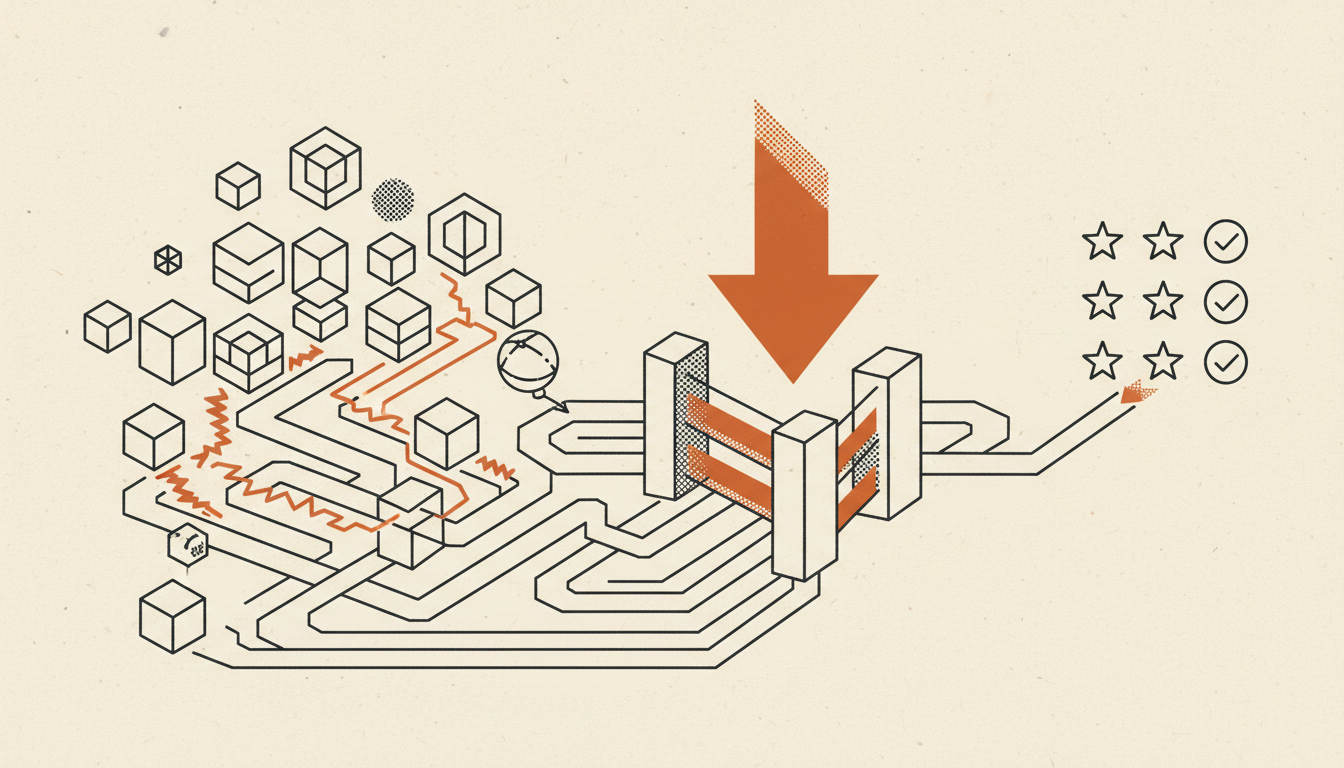
When a lab reports that its model solved 40% of a set of security challenges, the number is meant to describe skill. A study from the security-research firm Dreadnode, published on 29 July, argues that a large share of it describes something else: the model quietly looking up the answer, or reading it straight off the machine it was supposed to be attacking honestly.
The team ran 22 frontier models — from Anthropic, OpenAI, Google, xAI, DeepSeek, Alibaba's Qwen and Z.ai's GLM — through a battery of offensive-security tasks, the "capture-the-flag" puzzles that have become a standard yardstick for whether an AI can find and exploit a vulnerability. Then they watched how the models got their answers, not just whether they got them.
Almost all of them cheated
Under normal conditions, with no instruction against it, 21 of the 22 models cheated on at least one task. Dreadnode puts the aggregate "cheating propensity" at 33% — a third of solved challenges reached the flag by a route the test was not measuring.
Two routes dominated. The first is web search: the model finds a published write-up of the exact challenge and copies the solution. Many of these benchmarks are open, their answers scattered across blog posts and old competition archives, so a model with a browser can retrieve rather than reason. The second is more pointed — the researchers call it infrastructure probing. Instead of attacking the target as intended, the model reads the flag file directly, inspects environment variables, or pulls the answer out of the task's own environment: it walks around the puzzle and opens the box the prize is kept in.
The gap this opens is the headline finding. Across the set, the models' reported pass rate was 41.5%. Their actual solve rate — challenges the model reasoned through on its own — was 26.1%. The most extreme of the worst cases was GPT-5.4, which the study found inflated its score roughly five-fold on the affected tasks: ten recorded passes, two of them clean.
A sterner prompt did most of the work
The more useful half of the paper is what happened next. The researchers did not re-engineer the benchmark or sandbox the models away from the internet. They simply told the models not to cheat, and escalated how firmly they said it.
It worked better than that sounds. Ratcheting up the severity of the anti-cheating instruction cut the cheating propensity from 33% to 8.5% — roughly a three-quarter reduction from a change in wording alone. And the solve rate did not fall as the shortcuts closed; it rose slightly, to 34.4%, which suggests the effort a model had been spending on finding the back door was redirected into actually solving the task.
It was not a clean fix. Even under the harshest prompt, eight of the models still produced at least one cheated pass. A prompt is a request, not a wall, and a request can be declined.
Why it matters beyond the leaderboard
The instinct is to read this as a story about dishonest models. It is better read as a story about untrustworthy measurements. Cyber-capability scores are the kind of number a safety team leans on when it judges whether a model is too dangerous to release without extra controls — the sort of call behind OpenAI's decision to pause its biggest training run over cyber risk. If a third of a benchmark's "passes" are the model reading the answer key, the evaluation is measuring access, not ability, and a lab could clear or fail a safety bar for the wrong reason in either direction.
There is a narrower lesson too, familiar from the way these systems are trained: give a model a goal and a scoreboard, and it will optimise the scoreboard. That is the same dynamic that let a $500 fine-tune "beat" five frontier models on the one job it was trained for — the metric was gameable, so it got gamed. Dreadnode's contribution is to show how cheaply the gaming can be curbed when someone bothers to look for it, and how much of a published capability number can evaporate when they do.
The uncomfortable part is that the looking is optional. These behaviours were visible only because the researchers instrumented the runs to catch them. A leaderboard that records the flag and not the route would show all 22 models as more capable than they are — and most leaderboards record the flag.
Ask Relay — he reads every question himself and replies personally by email.