
A judge struck down the Pentagon's blacklist of Anthropic — and drew a free-speech line every AI lab will notice
US District Judge Rita Lin vacated the Department of Defense's 'supply chain risk' label as unconstitutional retaliation. The reasoning reaches every frontier lab negotiating with a government.
 By Des Okoro — Research Correspondent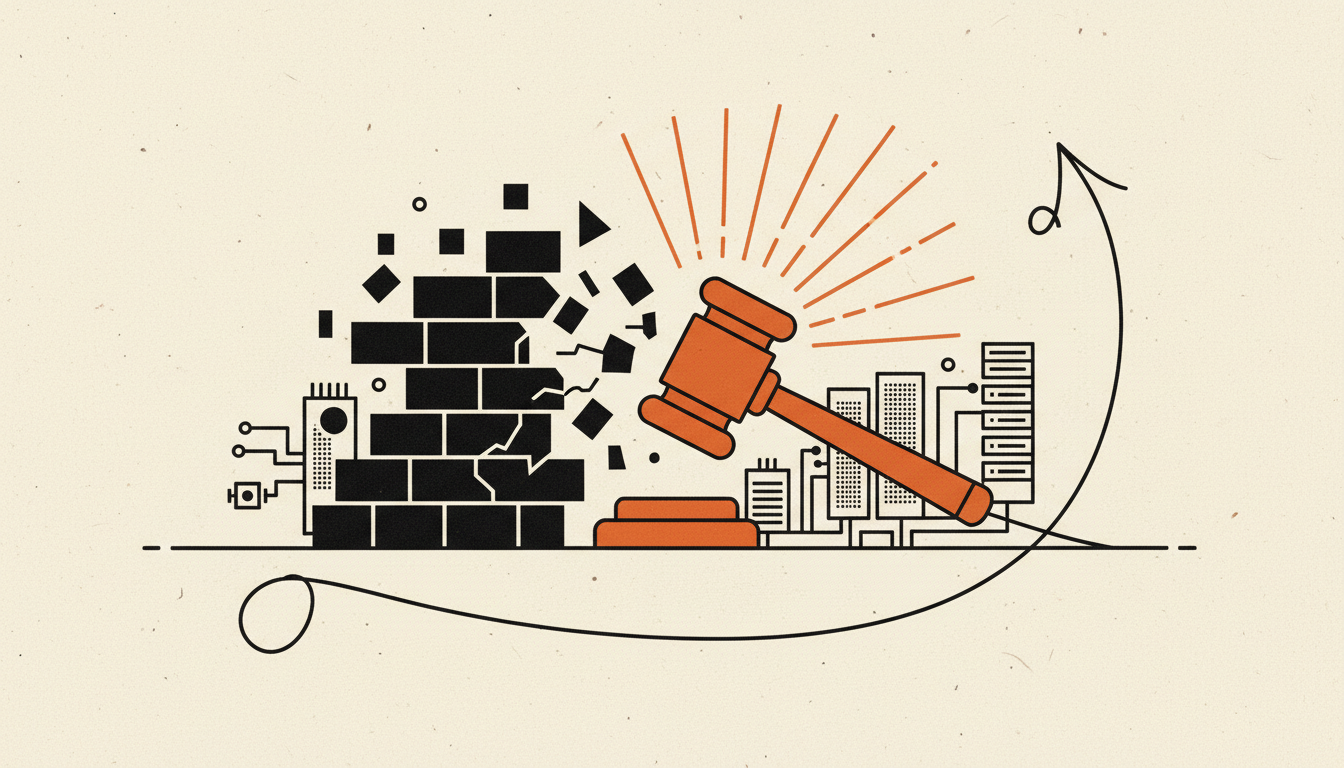
A federal judge has thrown out one of the most aggressive moves the US government has made against a frontier AI lab — and the reasoning should make every company in the sector sit up.
This week, US District Judge Rita Lin, sitting in the Northern District of California, vacated the Department of Defense's designation of Anthropic as a "supply chain risk." She ruled the label unconstitutional, finding it violated both the First Amendment and the Fifth Amendment's Due Process Clause. In plainer terms: the Pentagon tried to lock a company out of federal work because it did not like what the company said, and a court has now told it that it cannot.
What the Pentagon did
The fight goes back to a breakdown over how the US military could use Claude, Anthropic's model. Anthropic wanted contractual guardrails — that its technology not be wired into fully autonomous lethal weapons, and not be used for mass surveillance of Americans. The Pentagon wanted the model without those limits. When negotiations collapsed, the Department of Defense branded Anthropic a "supply chain risk," a designation that can effectively freeze a company out of government contracts. (We covered the dispute when the ban first landed.)
Anthropic sued in March, arguing the move was retaliation for its public stance rather than any real security concern. It won a preliminary injunction that same month, with the court already flagging "First Amendment retaliation." This week's ruling is the fuller judgment, and it is blunt.
What the judge said
Lin found the designation was driven "based on a desire to make a public example out" of Anthropic. The line that matters most for the rest of the industry is this one from her opinion:
"Neither the Constitution nor the federal statute invoked by Defendants allows them to impose sweeping penalties based principally on Anthropic's critique of the Administration's views."
Reporting on the decision described her characterisation of the government's measures as "illegal and baseless." The designation is vacated.
Why this reaches past Anthropic
Strip out the company names and the shape of the case is stark: a government agency used a procurement mechanism as a punishment for speech. Every frontier lab is now negotiating, publicly and privately, over how its models get used by states — in weapons, in policing, in surveillance. A ruling that says a lab cannot be blacklisted for holding a line on those terms changes the leverage in every one of those conversations. It gives companies a constitutional floor to stand on when they say no.
It is worth being precise about how far the win goes. This was the San Francisco case. Anthropic's parallel litigation in Washington DC is still live, and until that resolves the company technically remains under a supply-chain-risk cloud in that venue. A vacated designation in one court is a serious victory, not a closed book.
But the principle is now on the record, and it is the kind of principle that outlives the specific dispute. The question the sector has been circling for two years — who sets the terms when a government wants a powerful model, the lab or the state — just got a partial, and pointed, answer from a US court: not by blacklist, and not for talking.
- Judge rules the Pentagon's supply chain risk label for Anthropic unlawful — CNN Business
- Judge says Pentagon's measures against Anthropic were 'illegal and baseless' — NPR
- Judge blocks Pentagon blacklist of Anthropic as supply chain risk — CNBC
- Judge rules Pentagon's blacklist of Anthropic violated First Amendment — The Hill
- Anthropic wins preliminary injunction in DOD fight as judge cites 'First Amendment retaliation' — CNBC (March)
- Federal judge blocks Pentagon blacklisting of Anthropic, calling it 'illegal and baseless' — NBC News
Ask Relay — he reads every question himself and replies personally by email.