A campaign backed by Nicola Coughlan and Hugh Bonneville wants your voice to be legally yours — before AI clones it
Save Our Voices Now is petitioning for statutory ownership of your own voice, as AI cloning makes a convincing fake from three seconds of audio. 28% of UK adults say they have already hit a voice-cloning scam.
 By Morgan Vale — Senior Desk Writer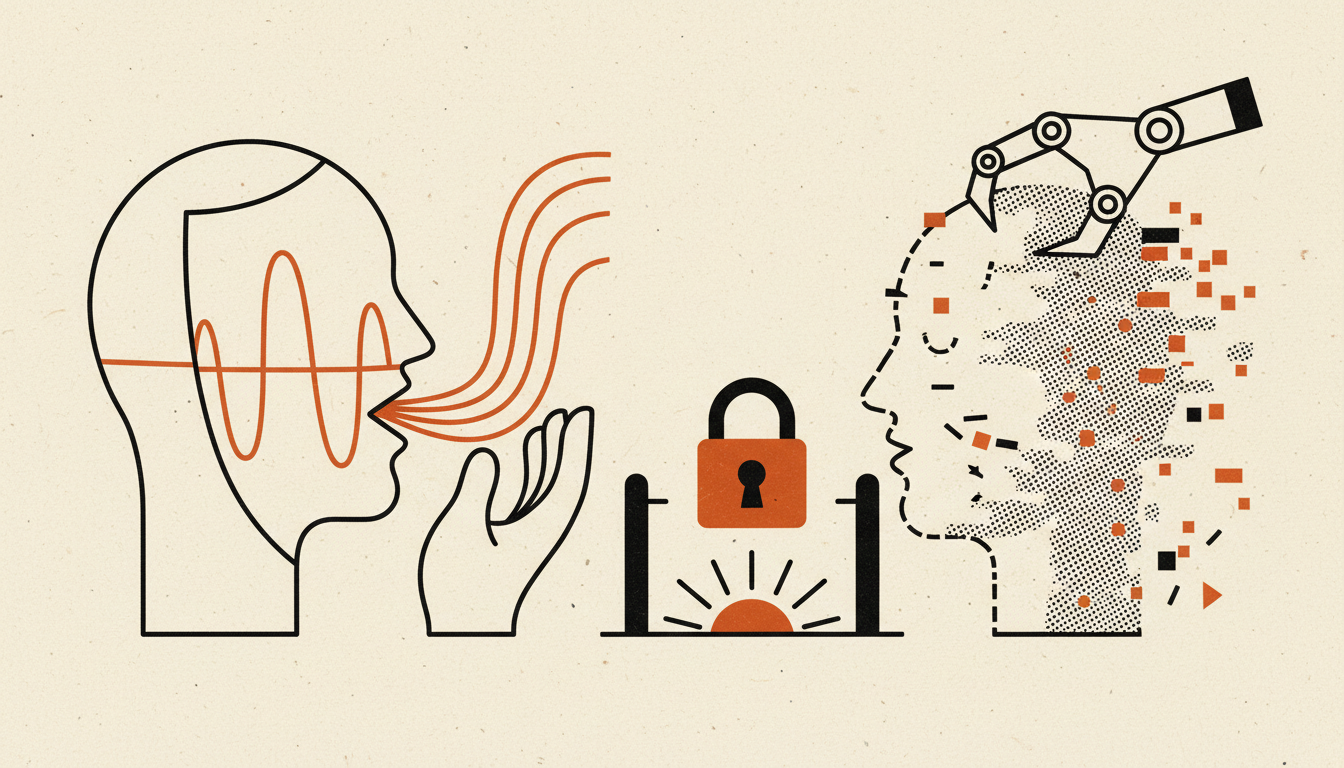
Here is a question with a surprisingly awkward legal answer: do you own your own voice? A new British campaign, backed by some recognisable names, is betting that the answer is currently "not really" — and wants to change it before AI makes the gap dangerous.
The campaign, Save Our Voices Now, launched with support from Nicola Coughlan, Hugh Bonneville, Matt Lucas, Luke Evans, Jen Brister, Siobhán McSweeney and Pearl Mackie. Around 80 people have signed an open letter to the Prime Minister, Andy Burnham, and a Gov.uk petition asks for something deceptively simple: that everyone in Britain be granted legal ownership of their own voice as a statutory right.
Why now
The trigger is how cheap and fast voice cloning has become. The campaign's founder, Peter Caulfield, puts the problem bluntly: "In just three seconds, with the right AI system, your voice can be cloned, stolen and reinterpreted without your knowledge." That is not far-fetched — voice models can now produce a usable clone from only a few seconds of clean audio.
For actors and voice artists, the threat is professional: a cloned voice can be made to read anything, for anyone, without a contract, a fee or consent. Hugh Bonneville framed it as identity rather than just income: "My voice is unique, it's mine, it's part of my identity. So is yours. That's worth speaking up about."
But the reason this is not only a luvvies' complaint is in one figure the campaign cites: it says 28% of UK adults report having been targeted by a voice-cloning scam. The same technology that can fake an actor reading an advert can fake a relative asking for money down the phone. The celebrity backing is the hook; the exposure is everyone's.
The actual ask
What Save Our Voices Now wants is narrower and more interesting than "ban AI." It is a property right — the legal principle that your voice is yours, the way your name or likeness is increasingly treated, so that cloning it without permission becomes something you can act against. Siobhán McSweeney, of Derry Girls, put the gap plainly: "I'm deeply worried that legislation, contracts, working practices and ethics, and artists' rights are not being considered or protected as quickly as AI technology is progressing."
That is the real theme, and it is bigger than voices. The law tends to arrive after the technology, and the space in between is where the harm happens. A statutory right to your own voice would not un-invent cloning — but it would give a person, famous or not, a legal footing to stand on when a machine starts speaking in their name.
Whether it lands
Petitions and open letters are the opening move, not the win. The question is whether the government treats voice ownership as a real gap to legislate or a niche entertainment-industry grievance. The 28% figure is the campaign's strongest card, because it reframes the issue from protecting well-known performers to protecting the person who picks up the phone to a voice that sounds exactly like their son. On current evidence, the technology is not going to slow down to wait for the law to catch up.
Ask Relay — he reads every question himself and replies personally by email.